
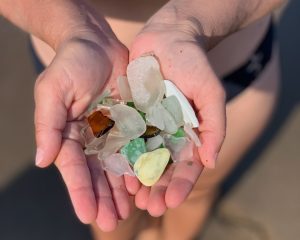
If you saw a piece of broken glass on the street, you’d step over it. Maybe kick it toward the curb. You certainly wouldn’t pick it up and carry it home. But tumble that same piece of glass in the ocean for fifty years and suddenly it’s a jewel. People will walk kilometres of beach for it, crouch in the cold wet sand for it, carry it home in their pockets and display it on windowsills where the light catches it just right. Hunting sea glass in Cape Breton is one of those small obsessions that sneaks up on you, and once it does, you start planning entire trips around tide charts.
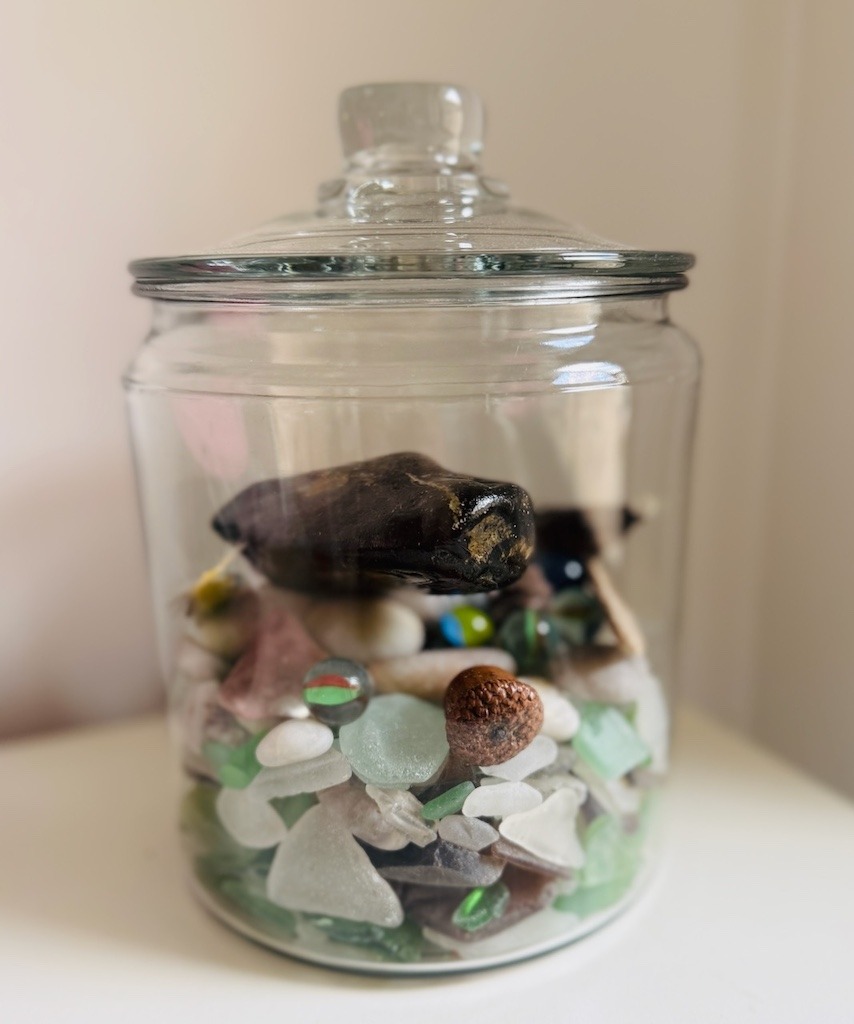
What is it about sea glass?
It’s transformation, mostly. The ocean takes something broken and disposable and works on it for decades, sometimes a century, tumbling it against sand and rock until every sharp edge is gone and the surface is frosted like old cathedral glass. The ocean does what time does to everything worth keeping. It removes the dangerous parts and leaves something worth holding on to.
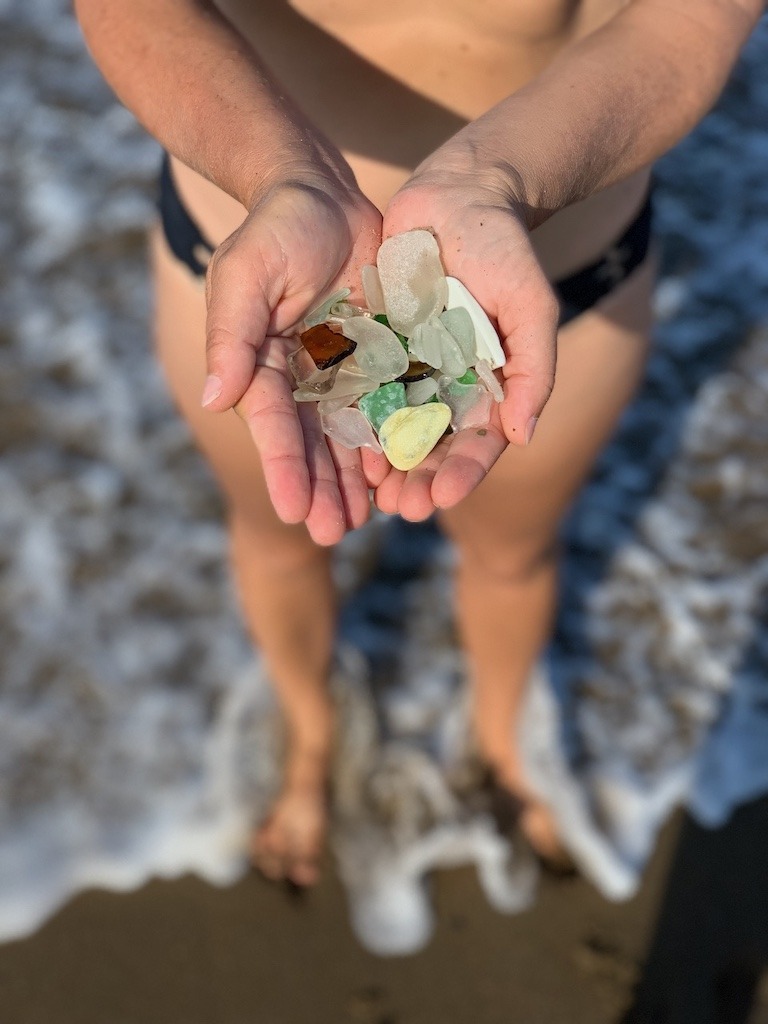
There’s also the hunt itself. You can buy sea glass, plenty of shops along the Cabot Trail sell it by the jar, sorted by colour, no sand in your shoes required. But buying it skips the only part that actually matters: the not knowing what’s around the next rock. The fact that you found it, on that morning, at that tide, and nobody else will ever find that exact piece again because it’s gone now, it’s in your pocket. A jar of curated glass from a gift shop is a souvenir. A piece you dug out of the wrack line yourself is a story.
And every piece was something once. A medicine bottle from a fishing village in 1920. A Coca Cola bottle from a supply boat. A piece of Depression-era tableware from a kitchen that no longer exists. You’re holding an artifact that the ocean chose to preserve and then chose to give to you, on that particular morning, at that particular tide. That’s pretty cool actually, and it’s a big part of why sea glass Cape Breton hunting has such a devoted following.
Cape Breton produces exceptional sea glass for a few reasons. The island’s long maritime history means centuries of human activity along these shores, fishing boats, trading vessels, coastal communities that lived and worked and yes, disposed of their garbage at the water’s edge the way everyone did before we knew better. The rocky shoreline creates the right conditions for tumbling, enough friction to frost the glass without destroying it. And then there’s Inverness Beach.
Inverness Beach is widely considered the premier sea glass Cape Breton destination, and the reason is not romantic: it was the site of the town dump. For decades, Inverness deposited its waste near the shoreline, the way many small coastal communities did throughout the late 1800s and into the 20th century. Glass bottles, tableware, medicine vials, household debris, all of it made its way into the water. The ocean has spent the last hundred years transforming that refuse into treasure. When you find a thick piece of cobalt blue or amber glass on Inverness Beach, you’re likely holding something that spent the better part of a century being made beautiful. The beach now yields coloured bonfire glass, vintage bottle shards, and occasionally pieces so old and well tumbled they look like sea stones. Walk to the right hand side of the beach for the best finds, locals have known this for years.

Sea Glass Cape Breton: Where to Hunt
Inverness Beach
Already covered above but worth repeating: this is the one. If you only hunt one beach, make it Inverness. Walk right, take your time, and go at low tide. The dump history means you’re as likely to find coloured glass here as anywhere on the island, amber, cobalt blue, soft greens that have been tumbling since your grandparents were young. There’s a reason the sea glass community talks about Inverness the way surfers talk about certain breaks. It delivers.
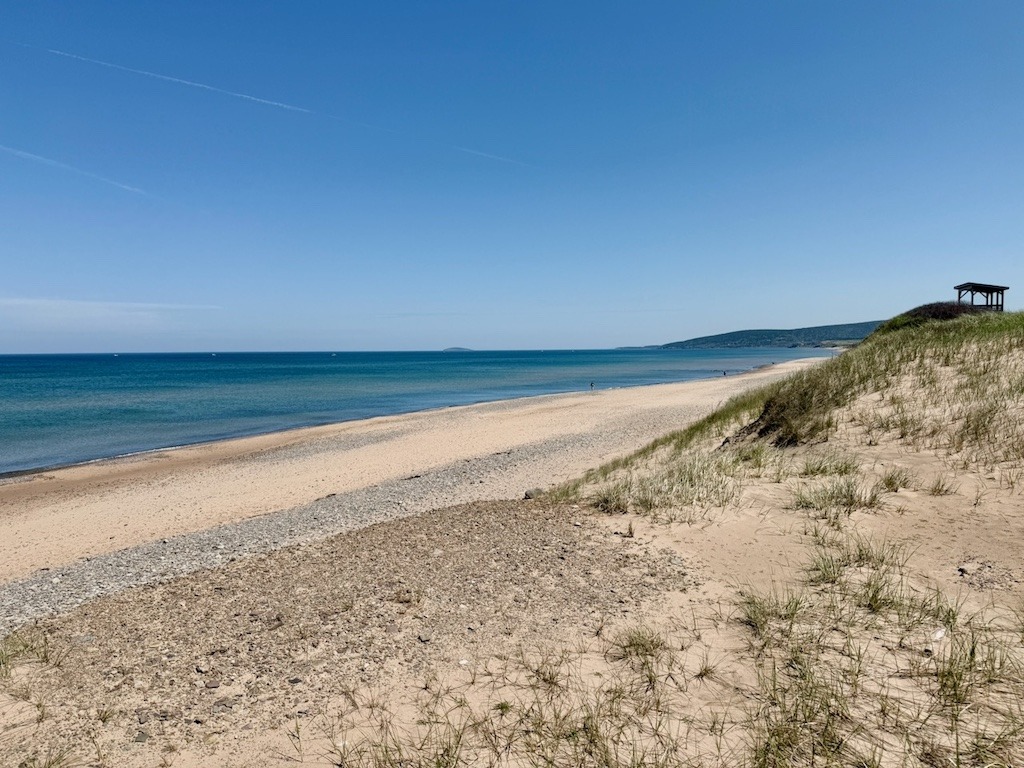
Florence Beach
Florence Beach holds a special place in my heart. It’s where my cousin takes me every time I visit and her love for it is infectious. The sea glass here tends toward the classic colours, white, green, the occasional brown, but the setting is worth the hunt regardless of what you find. Rocky, quiet, rarely crowded. This is the beach you go to when you want to think.
And here’s something else that makes it unique. I caught the sunset from one stretch of it the first night we arrived, and my cousin went back the next morning for the sunrise from a different part of the same beach. How is this possible? Well apparently there is a front and back beach that give you different views of the sun depending on where you are. Ask a local which end is which, and plan to spend a full day.

Port Hood
I’ll be honest, the one time I went specifically hunting at Port Hood I came home empty handed. No glass that day. It didn’t ruin the trip, the beach itself is beautiful and worth the stop regardless, but if you’re going purely for the hunt, manage your expectations a little more than I did. One thing I will say with total confidence after multiple visits: it is windy. Every single time. Dress for it, secure anything you don’t want to chase down the beach, and treat the wind as part of the experience rather than a surprise.
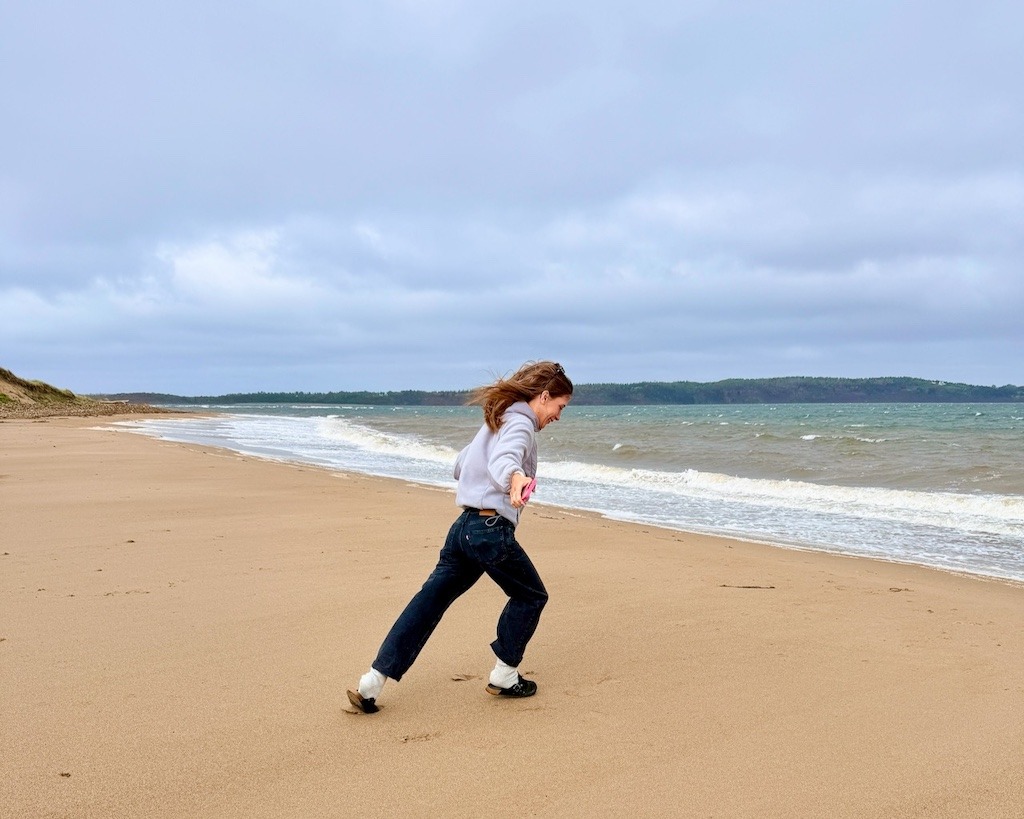
That same wind, a different story
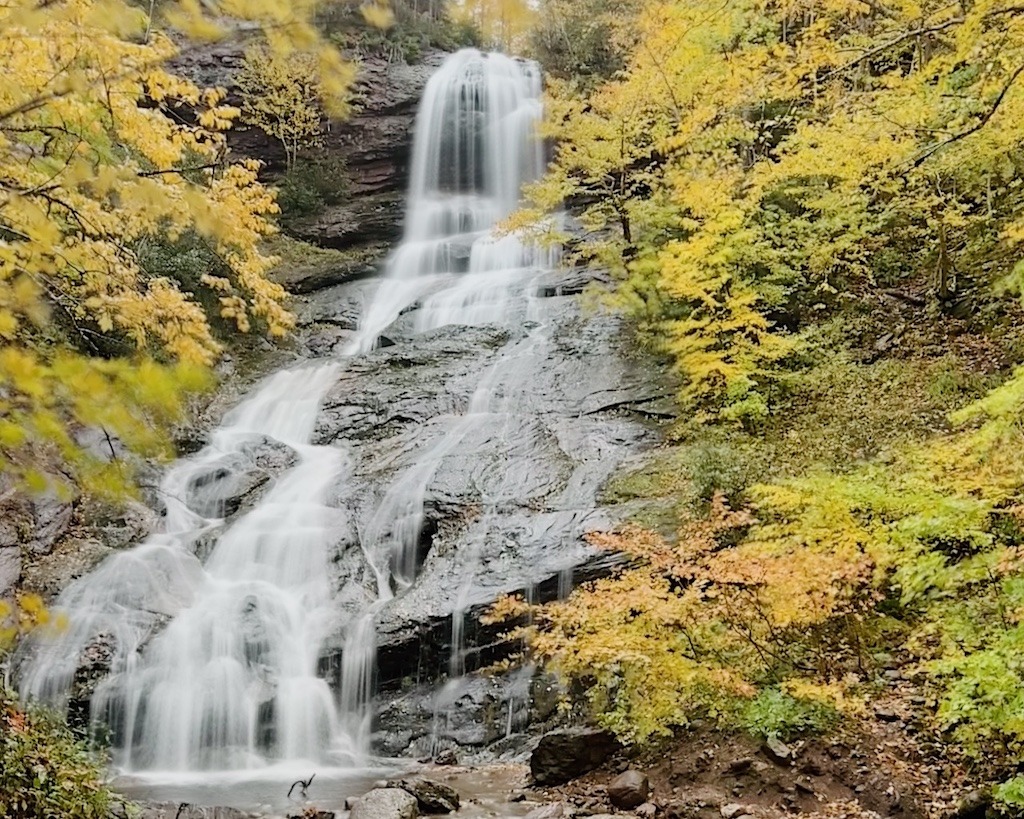
That Port Hood wind ended up being a bit of problem for our hike the next day. Yes, my daughter has the back of an 80 year old. Read the full, slightly chaotic story in my Cape Breton waterfall guide.
On my list for next time
I haven’t made it to these three yet, but here’s why they’re staying on my radar, and maybe they should go on your list too.
Neil’s Harbour Beach — known for exceptionally well weathered, matte frosted pieces. Small beach, gets picked over fast, so go early.
Indian Beach, Sydney — high volume of glass, smaller pieces, common colours. A solid pick for beginners or hunting with kids.
Dominion Beach — local favourite, lower tourist traffic. Pottery fragments turn up alongside the glass, some possibly off old shipwrecks.
The Practical Stuff Nobody Tells You
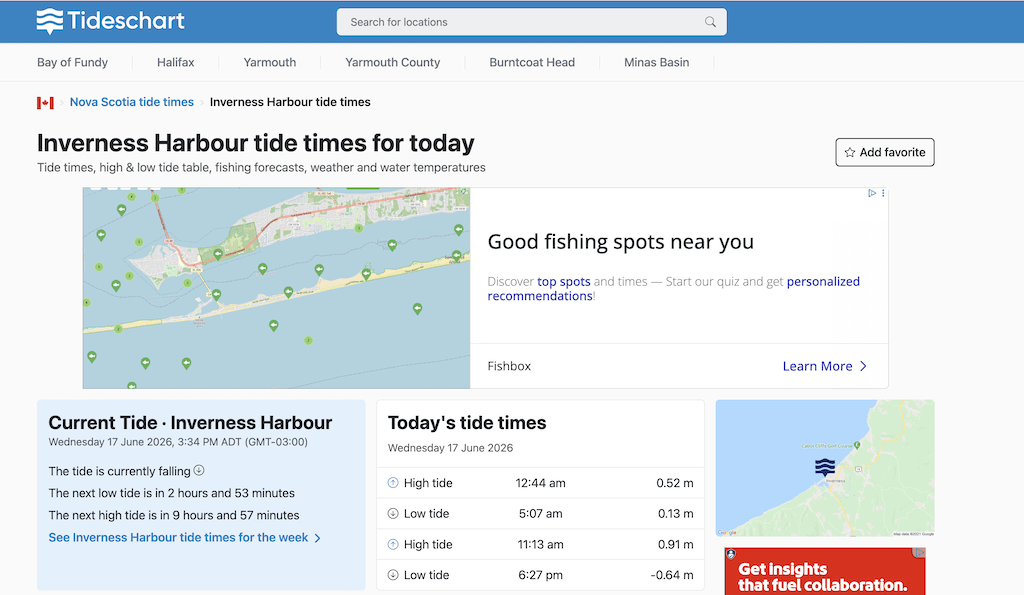
Go at low tide.
This is non negotiable for anyone serious about sea glass Cape Breton hunting. Receding water exposes fresh pebbles and with them fresh glass that hasn’t been picked over yet. Check a tide chart before you go, the difference between high and low tide in Cape Breton can be significant and showing up at the wrong time means walking the same picked over strip everyone else has already worked.
Hunt after a storm.
Heavy winds churn up the ocean floor and deposit new material on the beach. The morning after a good storm is the single best time to hunt sea glass anywhere, and Cape Breton’s weather is volatile enough to deliver one no matter what month you visit.
Walk the wrack line.
The wrack line is the furthest point the tide reaches, you’ll see it marked by a ribbon of seaweed, debris, and small stones. Sea glass gets deposited and trapped here. Walk it slowly.
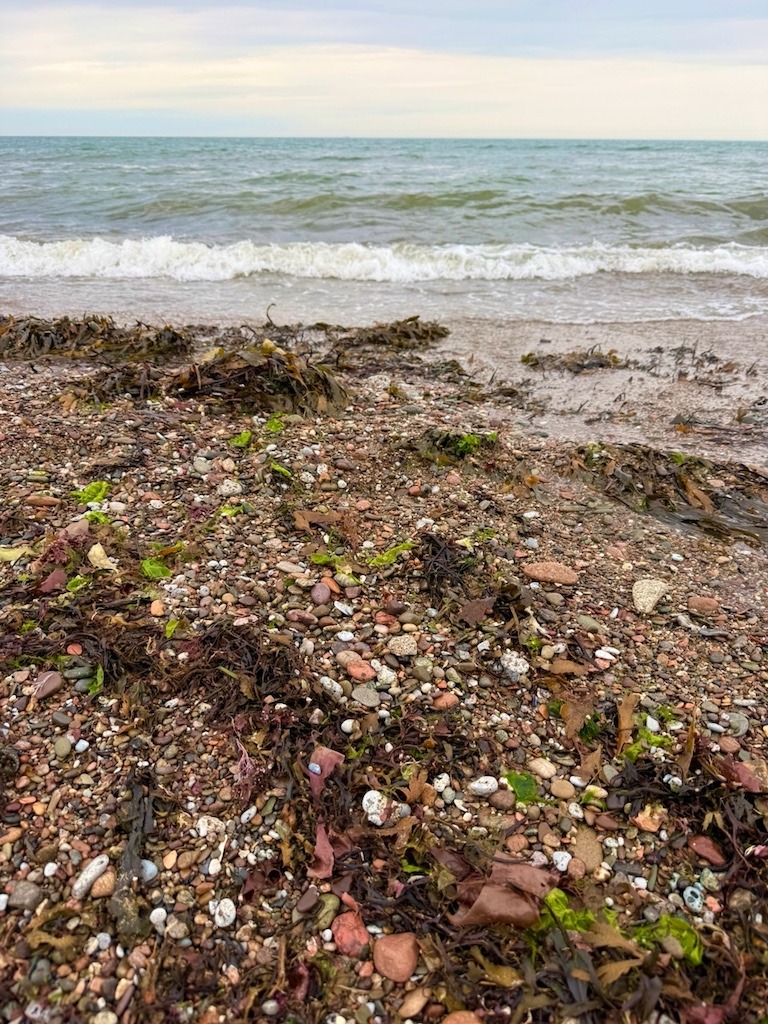
Go slow and look down.
Sea glass is not obvious from standing height. The frosted surface doesn’t catch light the way a piece of clear glass would. You need to be close to the ground, moving slowly, letting your eyes adjust to what you’re looking for. Once you’ve found your first piece your brain recalibrates and you’ll start seeing them everywhere.
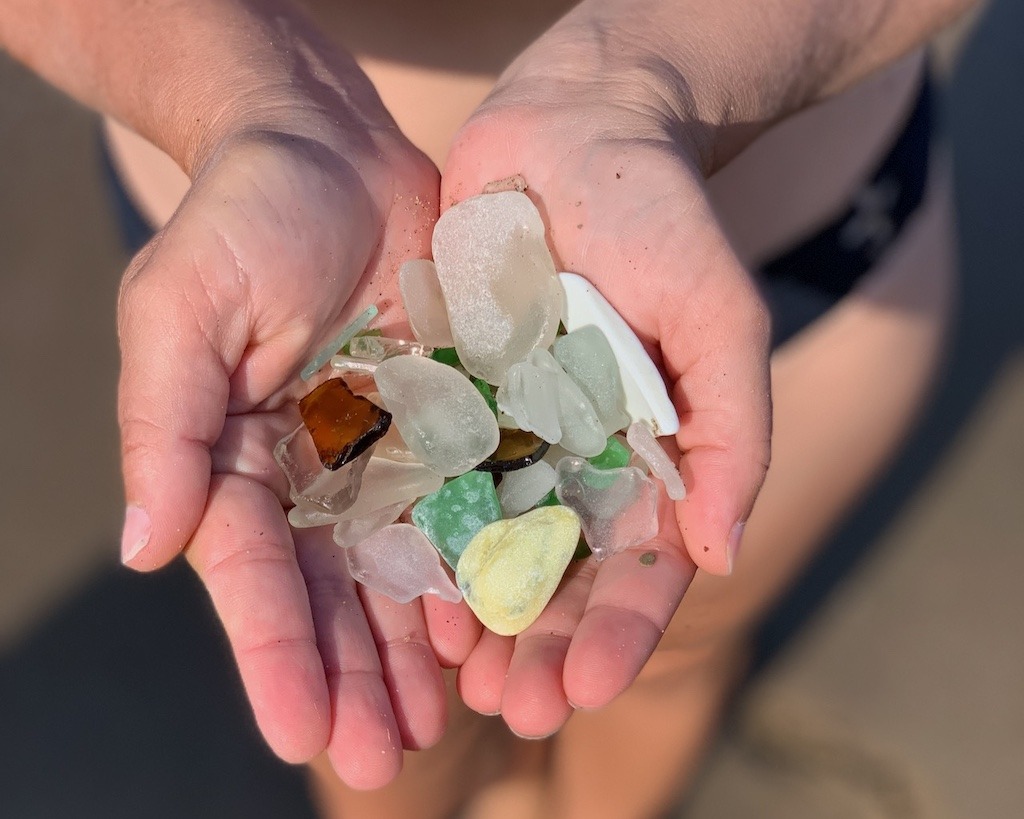
Know your colours.
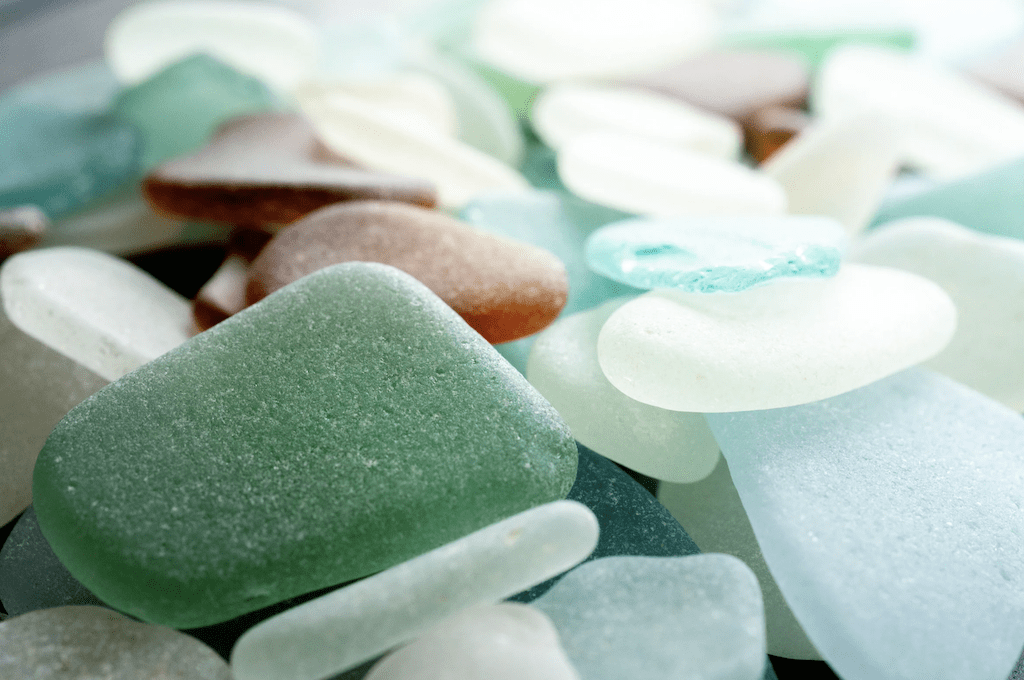
White and green are common, they come from bottles and jars and there’s no shortage of those in any dump or fishing community. Brown comes from beer bottles and medicine bottles. Blue is less common and worth getting excited about. Red, orange, and yellow are genuinely rare, red sea glass in particular is so uncommon that some hunters go years without finding a piece. If you find red, you are having a very good day.
There’s a Sea Glass Community
You don’t have to hunt alone. The Cape Breton Sea Glass Facebook group is an active community of hunters sharing finds, reporting conditions, and generally being the kind of people who understand why you drove forty minutes to crouch on a rocky beach in the wind. Worth joining before your trip for real time intelligence on what’s washing up and where.
That piece of glass on the street, the one you’d step over without a second look. Somewhere on a beach in Cape Breton, its cousin is finishing a hundred year tumble through sand and salt water, waiting for someone to crouch down at the right tide on the right morning and recognize it for what it’s become. That’s the whole appeal of sea glass Cape Breton hunting in one image. Maybe that someone is you.
Sea Glass Cape Breton: Frequently Asked Questions
It depends a bit on which beach, and it’s one of the more common questions anyone new to sea glass Cape Breton hunting asks. Nova Scotia’s Beaches Act technically restricts removing natural materials, rock, mineral, aggregate, from regulated beaches, and that wording is broad enough it could be read to include sea glass. In practice, enforcement against casual hobby collecting on municipal beaches like Inverness or Florence is essentially nonexistent. Dominion Beach is provincial parkland though, which puts it under stricter oversight than a municipal beach, so it’s worth taking a smaller, more conservative approach there and respecting any posted signage. None of these are ecological reserves, which is a different and much more strictly enforced category. General rule everywhere: take a few pieces for personal enjoyment, don’t strip a beach commercially, and if you see a sign restricting collection, follow it.
Low tide, without exception. Receding water exposes fresh pebbles and fresh glass that hasn’t already been picked over by everyone who got there before you.
Red. Some hunters go years without finding a single piece. Orange and yellow are close behind in rarity. White, green, and brown are the common colours, since they come from the bottles and jars that made up most everyday glass for the past century or more.
Indian Beach near Sydney has a reputation for high volume, more pieces overall even if they run smaller and lean toward common colours, which makes it a satisfying choice when someone new needs a quick win to get hooked on the hobby.

New to the island?
If sea glass has you curious about Cape Breton in general, start with the big picture. My full guide to why you should visit Cape Breton covers the Cabot Trail, the people, the beaches, and why I keep coming back, sea glass included.
 Chasing Waterfalls in Cape Breton: A Cautionary Tale (and a Survival Guide)

Leave a Reply