

I have spent twenty summers figuring out how to survive a heat wave without air conditioning, and I have some thoughts.
Because one day it just up and died on me. My central air, that is. Just up and left us without so much as a note. But instead of replacing it, I asked my family a question: do you want air conditioning, or do you want a pool?
We were cooling a house and heating a pool and it all just seemed so wasteful to me, so I drew a line in the sand. The pool won. And then something interesting happened: we actually started using it. The truth was with AC our house was cool and comfortable, and because of that the pool became a nice thing to look at. With no AC, the pool moved from suburban status symbol to summer survival strategy.

That was over 20 years ago and I do not miss central air. I actually hate it, and the way it makes me feel. Thankfully, our house is on three-quarters of an acre, which means I have actual air moving through my house rather than a sealed box baking in the sun. I have a pool. And I have maybe 10 days a year where I genuinely need to white-knuckle it through serious heat. For that, I have a system. But we will get to that.
First, I want to talk about something I am genuinely tired of.
Stop shaming people who are suffering.
Every time Europe has a heat wave, and they are having a catastrophic one right now, a certain type of person crawls out of the internet to say some version of: it is not even that hot. Texans handle worse. What’s the big deal?
I need you to stop.
And I say that as someone who has to own something first. I used to laugh at the footage of Georgia or other southern states shutting down over two inches of snow. How do you not know how to handle that? I thought. I live in Canada. We manage. What I did not think about was that Georgia does not have the snow removal infrastructure, the winter tires, the cold weather instincts, or the lived experience that makes navigating a Canadian winter feel routine. Of course they struggled. I did not know what I did not know, and I am sorry for every time I smugly watched those clips.
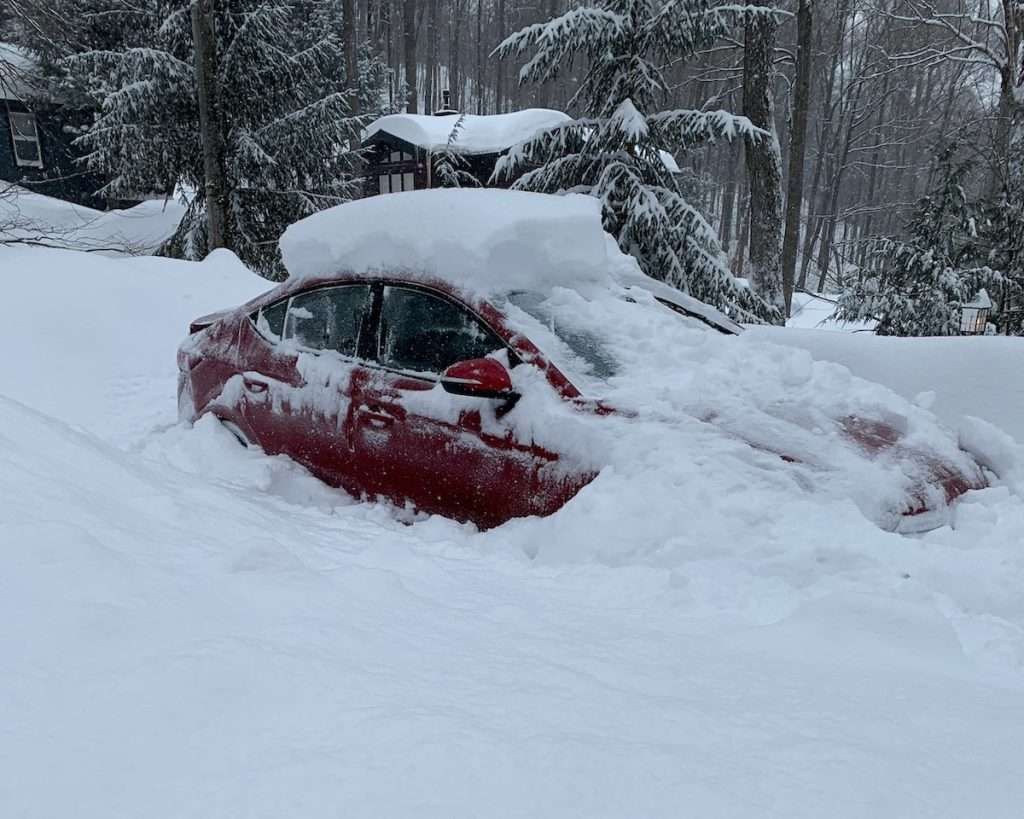
Because here’s the thing: climate change is not delivering its chaos evenly. There is brutal winter weather hitting places that have never needed to prepare for it. There is lethal summer heat baking cities that were built for mild, rainy summers. We are all going to be caught off guard by something that was never supposed to happen where we live. Every single one of us. The only question is whether we meet that moment in other people with empathy or with judgement.
Picking on people when they are down is just bad behaviour. Full stop.
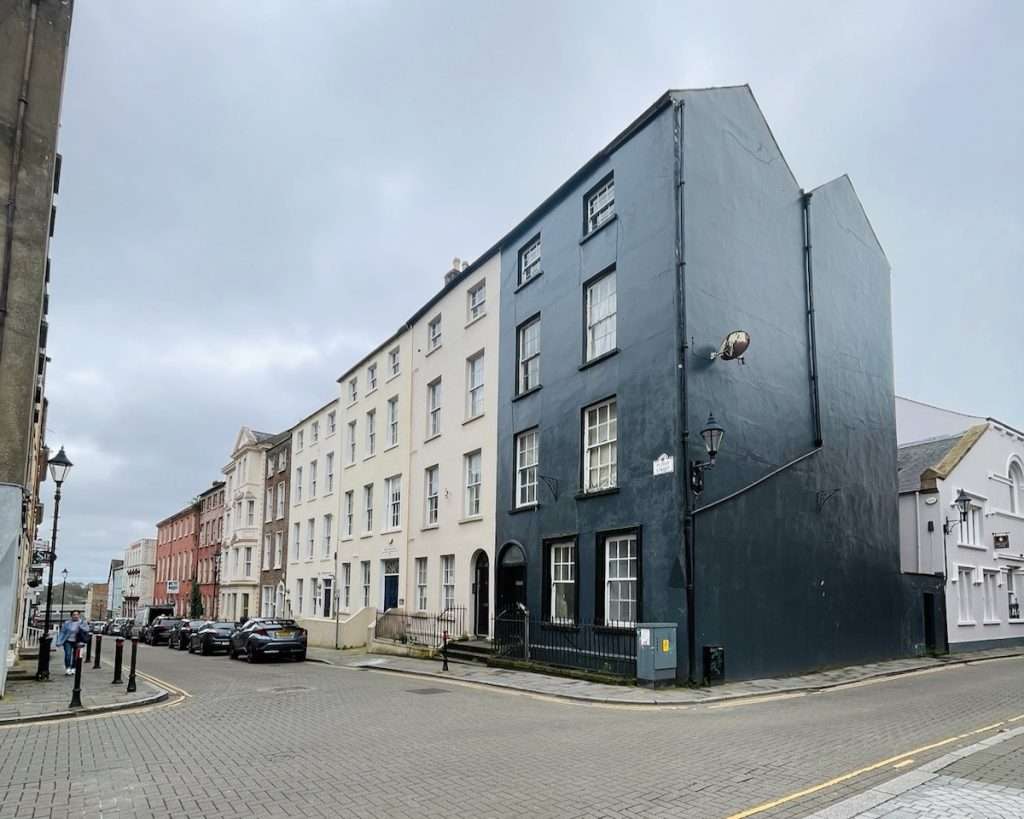
Only about 20% of European homes have air conditioning. In countries like England and France, homes were literally designed to trap heat because for most of those buildings’ lives, that was the point. Long, cold winters. You wanted a house that held warmth. In Britain, many older homes were built with thick walls, small windows and insulation meant to retain heat. One Londoner described his house during the current heat wave as feeling like a trap: hot outside, somehow hotter inside. There is literally no where to escape it.
And the typical European heat victim is an older adult, often over 80, with cardiovascular or respiratory disease, living alone in poorly insulated housing. Most die indoors, at home. People are dying. In their houses. Alone. And we are sitting here debating whether it counts as real heat.
Europe is the world’s fastest-warming continent, with temperatures rising roughly twice as fast as the global average since the 1980s. The infrastructure was not built for this. The buildings were not designed for this. The culture was not prepared for this. None of that is a personal failing.
So the next time you feel the urge to tell a European that you handle 40 degrees just fine, sit with that impulse for a moment and ask yourself what it is actually doing. It’s not helping anyone stay cool. It’s just making you feel superior about your thermostat.
The science behind why some people handle heat better than others.
Here is something I’ve come to understand well: acclimatization is real, and it matters more than most people realise.
The technical definition: Heat acclimatization is the body’s natural process of adapting to cope better with warm or hot environments, achieved through gradual increases in heat exposure over days or weeks. Your body actually changes. You start sweating earlier, produce more sweat, and lose fewer electrolytes, improving your cooling efficiency. Your blood plasma volume expands, which lowers your heart rate and reduces cardiovascular strain. Full acclimatization takes one to two weeks of regular exposure.
I think this is a significant part of why I handle Ottawa heat waves as well as I do. My body isn’t living in a sealed, climate-controlled environment so as the temperatures climb, so does my tolerance for it. When 30 degrees arrives, I am not walking into it cold (pun intended) from an air-conditioned cocoon. I have been working toward it.
This is also why people in Texas and Louisiana handle that heat better than visitors do. They’re not especially tough, it’s biology. And it is worth remembering before you decide that someone else should be handling things better than they are.

There is an uncomfortable irony sitting underneath all of this too. Air conditioning generates heat as it removes warmth from enclosed spaces, releasing it into the surrounding environment and contributing to warming during peak summer demand. It’s a feedback loop: as temperatures rise, more people buy air conditioners, which drives up emissions, which drives up temperatures, which drives demand for more air conditioning. Overuse of air conditioning actively works against our body’s ability to acclimatize, making people more vulnerable and more dependent on it over time.
I’m not saying no one should have air conditioning. I’m not saying that at all. What I am saying is that the people in Europe who are resisting it, partly out of genuine concern for what it does to the climate, are not being ridiculous. They are wrestling with a real dilemma that has no clean answer. And the people who are suffering without it deserve empathy, not a lecture about toughening up.
We need to find ways to adapt without being awful to each other. That is it. That is the whole argument.
What I actually do to survive the heat.
So rant out of the way, let’s move on to surviving it.
For the 10 or so days a year when Ottawa gets genuinely brutal, here is my system, built over two decades of no central air.
Watch the forecast and act early. When I see a heat wave coming, I start managing airflow before it arrives. Every window open in the evening. Fans running all night, pulling cool air in and hot air out.
Close everything at 6 AM. This is the most important thing most people do not do. Once the outdoor temperature starts climbing past your indoor temperature, open windows stop helping and start hurting. Curtains drawn, blinds pulled, windows shut. You are trying to trap the cool air you collected overnight, not invite the heat in.
Turn fans off when you leave the room. A fan does not cool a room. It cools a person by moving air across skin. Running a fan in an empty space just adds heat from the motor. Shut them off.
Stop adding heat to your house. This one matters more than people realise. Put the hairdryer down. I know, I know. But you are going to be fine. Find a style that works with your natural texture and own it for a few days. Your hair will survive. More importantly: do not use your oven. Do not even use your stovetop if you can avoid it. Invest in a small portable burner, the kind you plug in, and set it up outside on your balcony, your deck, your patio, wherever you have outdoor space. Boil your kettle out there. Heat whatever needs heating outside where it belongs. This works whether you live in a 500 square foot apartment or a 5,000 square foot house.
Eat cold food. Raw vegetables, salads, fruit, anything that requires no heat to prepare. You need to be hydrating anyway during a heat wave, and fresh produce does exactly that while keeping your kitchen from becoming an additional heat source. It is a few days. You will be fine.
Stay low. Heat rises. If you have a basement, use it. If you do not, the lowest floor of your home will always be cooler than the top.
Hydrate before you are thirsty. By the time you feel thirst in serious heat, you are already behind.
Get into cold water whenever you can. A pool if you have access to one, public or private. A lake, a river, a cold shower, a splash pad with your grandkids. Your bath tub. Getting your core temperature down fast is the most effective reset available to you. Just check local advisories before heading to natural water. Blue-green algae blooms and E. coli warnings after heavy rain are increasingly common as the climate shifts. Two minutes on your public health website before you load the car is worth it.

And please, please make sure you can actually swim. Not splash around. Swim. Confidently, in open water. If your kids do not have swimming lessons, that is the most urgent item on this entire list. Too many people have already drowned this summer trying to cool off in conditions they were not prepared for. If you are not a strong swimmer yourself, stay where you can stand, go with others, and know how to help someone in distress without putting yourself in danger. Reaching or throwing a flotation device is always safer than jumping in.
Remember that it ends. A heat wave feels eternal when you are inside it. It’s not comfortable, it’s not fun, and there are moments when it genuinely feels like it will never break. It always does. Knowing that does not make the humidity easier, but it does make it survivable.
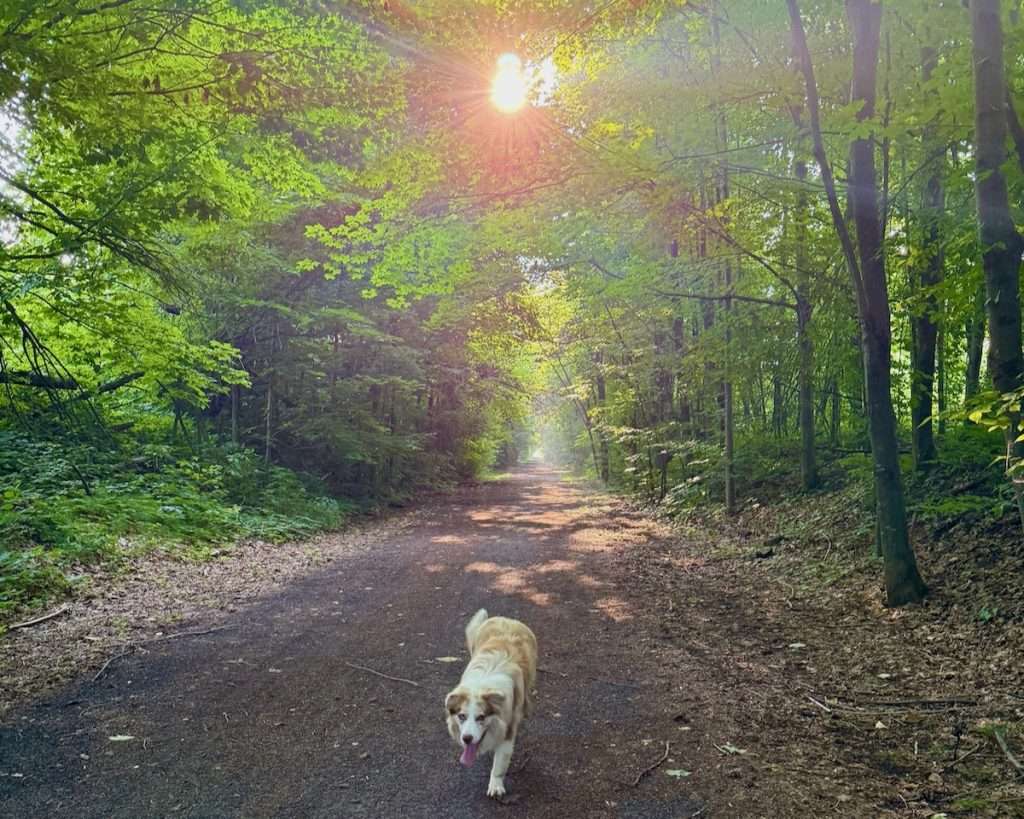
We live in different climates. Act like it.
Climate change is going to affect different parts of the world in different ways, on different timelines, with different infrastructure constraints and different histories and different economic realities. None of that is simple. None of it deserves a simple take.
Half the people in Europe do not want air conditioning because of what it does to the climate. The other half desperately want it because they are suffering. Neither position is wrong. Both are completely human responses to an impossible situation that none of us created alone and all of us are now living inside together.
Here is what I keep coming back to: the extremes should be making us more empathetic, not less. When people are freezing in places that have never seen ice storms, when people are dying of heat in cities built for mild summers, when the weather itself is becoming genuinely unpredictable and dangerous in places that historically never had to deal with this, that should be cracking us open a little. That should be the thing that reminds us we are all navigating something none of us fully understand yet.
Instead some people get colder. More dismissive. More certain that their own experience is the standard everyone else should be measured against.
It’s a strange response to a crisis that is going to touch every single one of us eventually. We are all going to be the person caught without the right infrastructure at the wrong moment. The grace we extend to other people right now is the grace we are going to need someday.
So extend it. It costs nothing. And it might be the most useful thing any of us does this summer.
Travel Tip
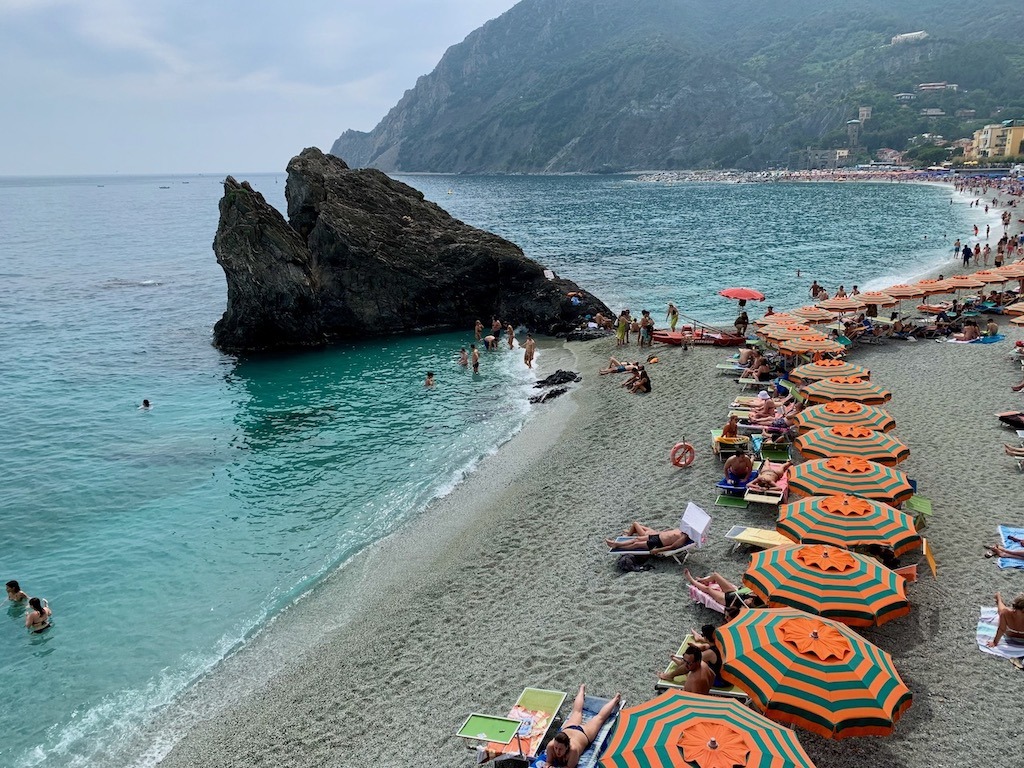
Travelling somewhere without air conditioning this summer?
If you are heading to the UK, France, or elsewhere in Europe right now, or really anywhere without reliable cooling, a few things will help. Book accommodations with confirmed AC or fans and cross-check reviews, not just the listing. Also a Rearrange your day so you are indoors or in the shade during the hottest hours, roughly noon to 4 PM, and save your sightseeing for mornings and evenings.
Pack a small personal fan. The handheld battery-powered ones are light enough to forget in your bag until you need them, and on a packed metro platform or in a crowded museum, you will be very glad you have one.
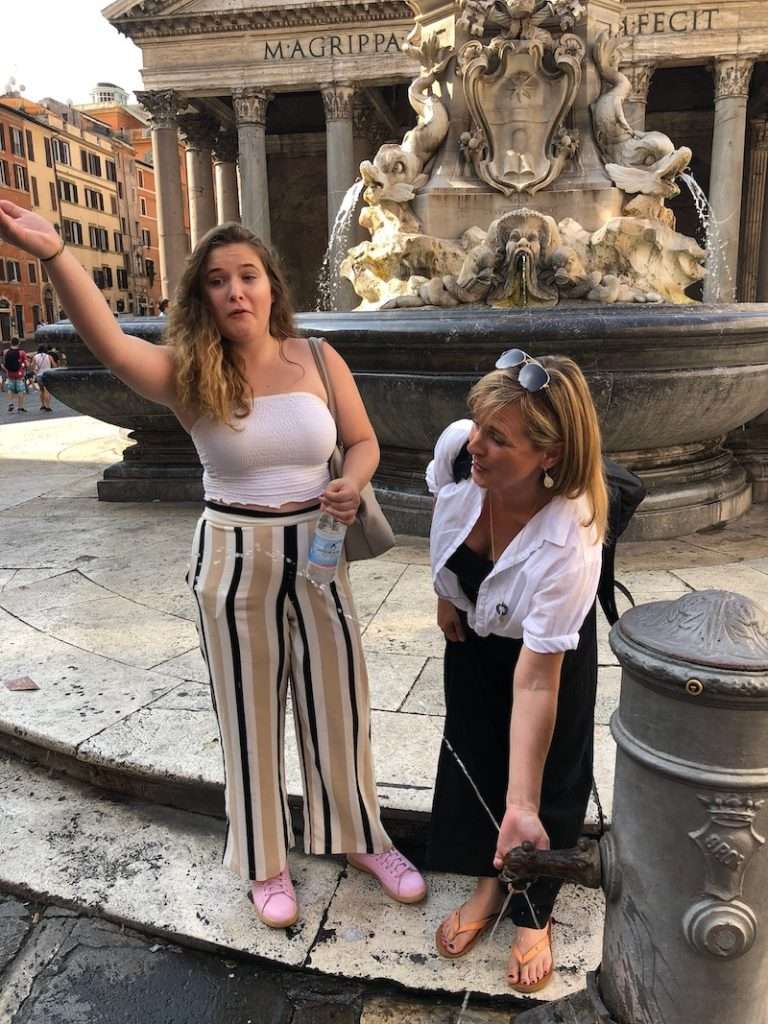
Something I learned in Rome: find a fine, lightweight fabric, something almost silk-like, that can get wet without feeling heavy. Soak it, wring it out, and drape it around your neck. The evaporative cooling is immediate and surprisingly lasting. It is low-tech, costs nothing, and it works.
Carry water constantly. Seek out stone churches, museums, and underground spaces during peak heat. And give yourself a few days to adjust before you push hard physically. Your body will acclimatize, but it needs time.
Planning a trip to Italy? Read: Top 3 Must-Visit Tours When Travelling in Northern Italy
Planning a trip to Ireland? Read: The Ultimate Ireland Road Trip: North Coast to the Wild Atlantic Way
Surviving a Heat Wave without Air Conditioning FAQ
Most European homes were built for cold winters, not hot summers. The architecture was designed to trap heat, not release it. Until recently, summers in much of northern Europe were mild enough that air conditioning felt unnecessary. Now that climate change has made extreme heat a regular reality, the infrastructure simply has not caught up, and retrofitting older buildings is genuinely difficult and expensive.
Is it dangerous to be in a heat wave without air conditioning?
It can be, particularly for older adults, people with cardiovascular or respiratory conditions, and anyone living alone in a poorly ventilated space. The key factors are overnight temperature recovery, hydration, and access to cool spaces during peak heat hours. If indoor temperatures are not dropping overnight, that is when the danger escalates significantly.
Yes, in meaningful ways. Air conditioning accounts for roughly 10 percent of global electricity consumption, and the refrigerants used in most units are potent greenhouse gases. The more the planet warms, the more people run air conditioning, which drives further warming. Researchers call it a feedback loop, and it’s one of the harder problems in climate adaptation.
It’s the process by which your body physically adapts to higher temperatures over one to two weeks of gradual exposure. You start sweating earlier and more efficiently, your blood plasma volume expands, and your cardiovascular system handles heat with less strain. People who live without air conditioning tend to acclimatize naturally as temperatures rise through spring and early summer.
Open every window in the evening and overnight to pull in cool air. Close everything by 6 AM before outdoor temperatures start climbing. Keep curtains and blinds drawn through the day. Turn fans off when you leave a room. Stop adding heat inside: no hairdryer, no oven, no stovetop. Use a portable burner outside instead. Eat cold food. Get into cold water whenever you safely can. Stay low in your home. Hydrate before you feel thirsty.
Now it’s your turn. Drop your best heat survival tip in the comments below. Whether it is something your grandmother swore by, something you figured out during a brutal August, or something you learned travelling somewhere that does not have air conditioning, I want to hear it.
 Is Habitat for Humanity ReStore Worth It? I Have Opinions (because of course I do)

Leave a Reply