
My youngest daughter turns fifteen in 21 days, 22 hours, 16 minutes and 41 seconds. I know this because I have been counting down the days for a little over six months now. It is with keen anticipation that I look forward to saying, “Good riddance 14, don’t let the door hit you in the ass on the way out!” because if there’s an “official” worst age for girls, 14 is it.
Updated May 2026: My daughters are now 23 and 21. I can confirm that 14 nearly killed me, 15 was not a picnic, and 16 still had its moments. I can also confirm that everything after 14 felt incrementally more survivable, and that both of them have turned into actual humans I genuinely like. The field research holds. I stand by every word.

I may not have reams of laboratory data to back up my claim that fourteen is the worst age for girls, but I do have field research. I have been in the trenches with fourteen twice, and in an astounding lack of pre-planning, less than 21 months apart. That means that I barely had two years to recover getting one daughter through fourteen, before I did it all over again. Please, for the love of your sanity young mothers, do not make my mistake. Space them out.
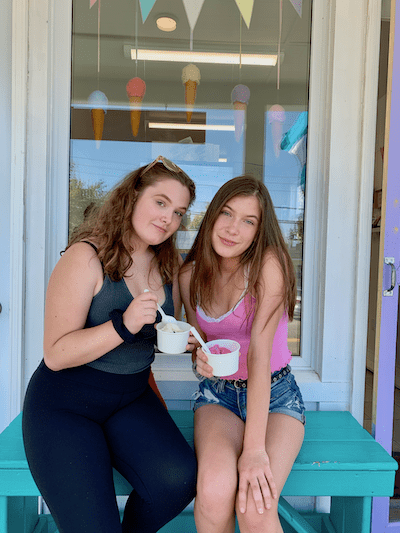
Before I go any further, I need to say I have mad respect for this kid. She’s positively kick-ass in everything she does, has a strong identity, and stands firm with her personal boundaries. She also scares me you guys. Like, really scares me.
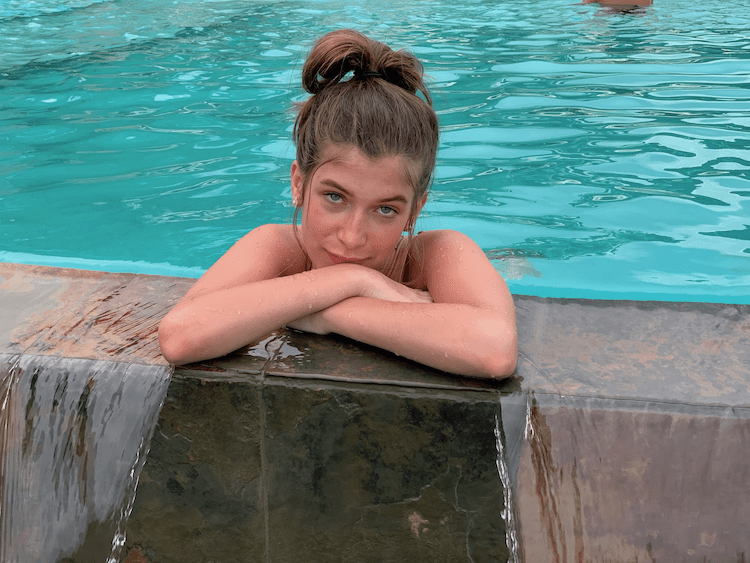
Over the last year, I have been conditioned to always be on guard. Shoulders hunched up, eyes squinched tight, always waiting for the mood to shift suddenly and without warning. I’ve learned to not even trust the seemingly quiet moments — we’re good, we’re good, we’re good, BAM! We are so not good. I swear, I did not even change the pace of my breathing, but suddenly I am public enemy #1.
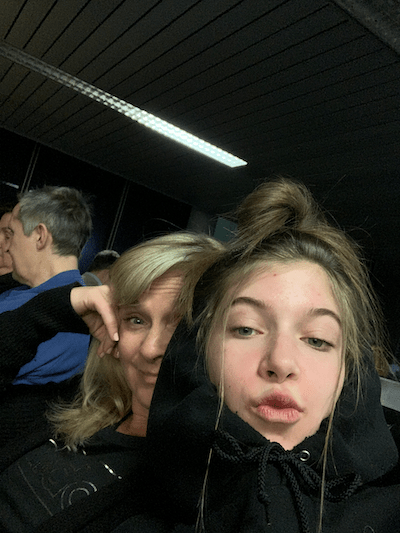
And I know it’s not her fault. We are dealing with thousands of years of evolution here people. The universe is not handing me some cosmic dish of karma because of my teen years. Teen girls are the victim of their own hormones, a brain imbalance that causes them to have the impulse control of a four year old (second worst age by the way), and an instinctive need to push their parents away as a way to gain their own independence. It’s quite literally out of their hands.
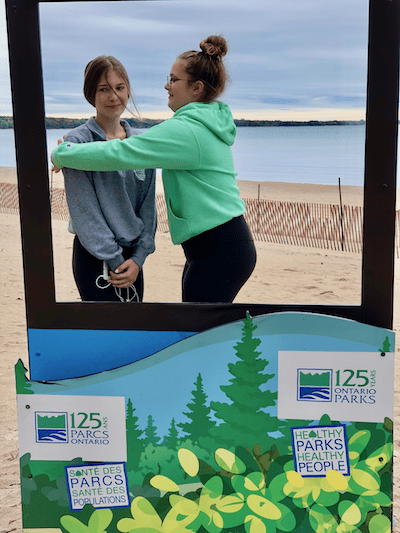
Even Ava will look at me sometimes mid-stream as if to say “Help me, I’m trapped inside this person I can’t control” and then, poof, that self-awareness is gone. It’s beyond hard, but I have learned a few things just in time to never have to parent a 14 year old again. Parenting is funny that way, not in a ha-ha that’s hilarious kind of way, but in a too bad you didn’t know this going in kind of way.

So in an attempt to save just one future mom a few brain cells, here are a few of my key learnings as I come through the hardest teen year ever.
- Pick your battles. As a slightly neurotic adult, I’ve got 50 years of coping mechanisms in place. I could quite literally nitpick at her from the time she opens her eyes until she goes to bed, but that only creates resentment. Also, it’s helpful to question if you’d want someone doing this to you all day? I now let her questionable organizational skills slide, and focus on making sure she feels loved. Ultimately, as parents, this is really our only job.
- I started to ask, “Do you want me to listen or do you want my advice?”, and that one little shift has had a dramatic effect on our relationship, because sometimes she just needs a safe place to vent without my opinion. Still, I am genuinely encouraged that about 80% of the time, she asks for my advice.
- I stopped treating her like a child, and ooof, this one gets me right in the feels. It’s so damn hard to let your children turn into adults, but it’s absolutely critical to let them fail, make them accountable, and ignore them when they could do it on their own.
- Take it and shut up. This was perhaps the hardest one for me to swallow, but I have learned that even when the most hurtful things are thrown my way, it’s because I’ve created a space safe enough for her to do so. I take a walk, get space of my own, and inevitably by the time I’ve returned, the storm has passed.
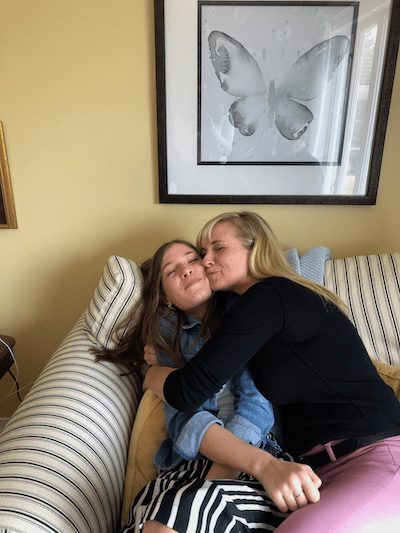
I don’t want to create illusions; there is no magic faucet that gets turned off at 15. That being said, the spaces of calm as we approach it, are stretching out. The “dark months” as we now call them, that consumed us from January to March are now a fuzzy memory. The other day, she even asked me out on a coffee date, temporarily placing me back in cool status. As I sat across from her listening to her plans —short, medium, and long-term— I was in awe of her beauty, her wisdom, and her truth. Then it struck me, maybe I’ll stop counting down the days now.

What Parents Need to Know About the Worst Age for Girls
Most parents who have been through it will tell you 14, and the research broadly agrees. It’s the convergence of peak hormonal disruption, a prefrontal cortex that is genuinely not finished developing, and an instinctive developmental drive to push parents away as a step toward independence. It is not personal. It just feels intensely personal.
At 14, girls are caught between childhood and adulthood in a way that is neurologically as well as emotionally disorienting. The impulse control centre of the brain, the prefrontal cortex, won’t be fully developed until their mid-twenties. Meanwhile, hormones are doing their absolute worst. The result is a person who feels everything at maximum volume with minimal ability to regulate it. They are not doing it to you. They are doing it with you, because you are safe enough to do it with.
Yes. Not all at once and not on a schedule, but yes. What most parents notice is that the stretches of calm gradually get longer. The storms don’t necessarily stop but they pass faster. By 15 and 16 most parents report that something shifts, and the person they knew before starts to come back, with considerably more self-awareness and a better vocabulary for what they’re feeling.
It varies by kid but 14 tends to be the peak because it’s when the social pressures of high school fully land at the same time as the neurological and hormonal factors. Thirteen is often the preview. Fourteen is the feature presentation.
 Into the Great Wide Open – Skydiving Into Life’s Next Chapter

Kari Anne Watterson
“Do you want me to just listen, or do you want my advice?” That’s gold right there. I’ve been working on this with my oldest (who just graduated high school) as well as my tween. If I don’t ask, I can usually tell mid-sentence (mine) which one they were hoping for just by looking at their face. Parenting this age is lovely, maddening, delightful, and character-building, but worth every minute. 😛 So glad I found this post today!
Candace Sampson
Thank you so much Kari. You hit it on the head. As much as she is growing and changing through this, so am I. Life’s a trip 🙂