
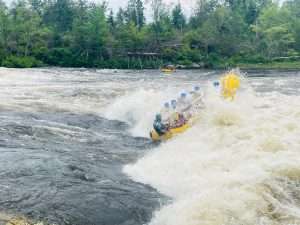
The first time I went white water rafting I was 43. If you had told me then that I would still be doing it at 56, and voluntarily, I would have laughed in your face and gone back to my sangria. But here we are. It turns out white water rafting for beginners in Ontario is one of those things that grabs you on the first run and never quite lets go, and three weeks ago I was back on the Ottawa River proving it, this time scouting OWL Rafting as part of Girl Trips Summer Camp 2027.
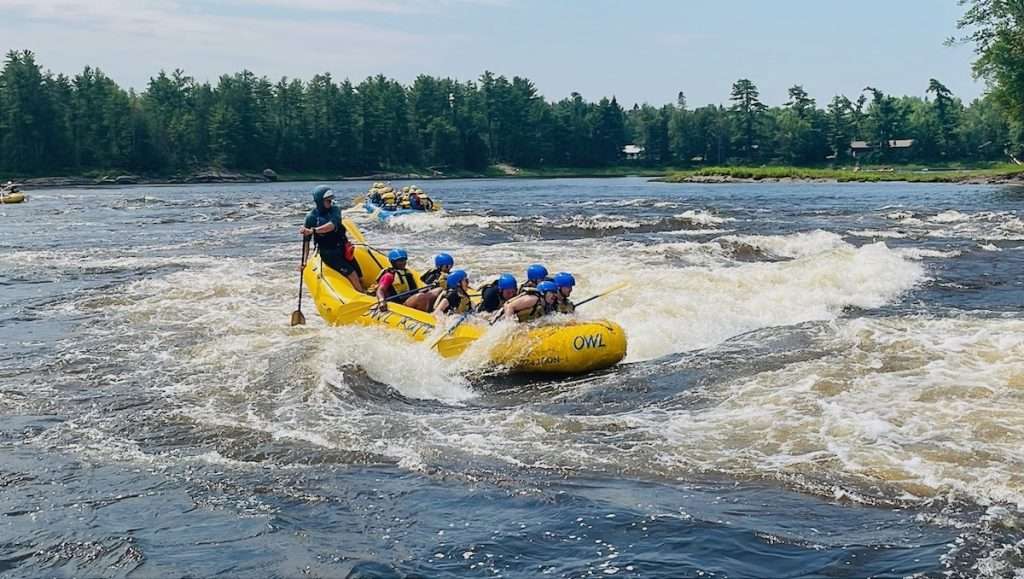
So I grabbed my personal support worker, because at my age someone has to be able to drive to the hospital, and we headed off into the Canadian wilderness. I kid, of course. She’s just younger with quicker reflexes, so I thought she might prove useful. Truth is, I knew I’d be fine, because the first thing you need to know about white water rafting is that it looks a lot scarier than it really is. So what I want to do here is talk to the woman reading this with one eyebrow raised, wondering if she is too old, too soft, or too sensible for any of this. I was that woman. I am here to tell you, gently and with receipts, that if I can do this, so can you.
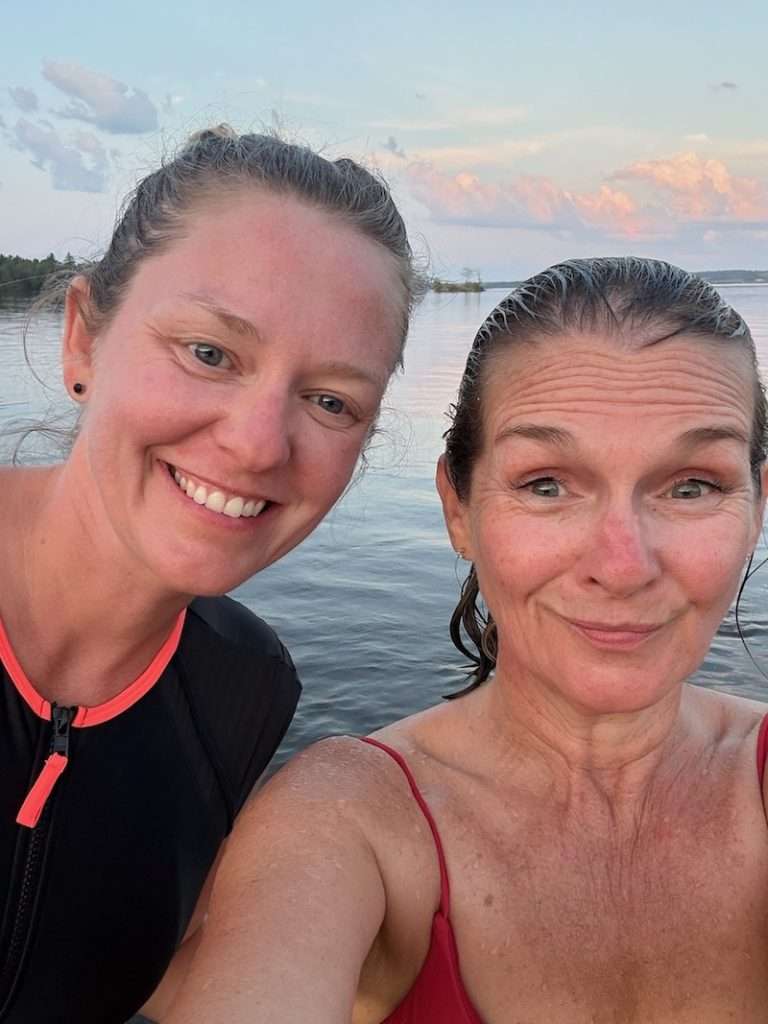
Am I too old for white water rafting?
Short answer, no, and I say that as a woman with a long and slightly concerning history of doing things I probably shouldn’t have. I’ve jumped out of a plane. I was a committed scuba diver. I once sat in a shark cage while a bull shark circled and openly considered me as a snack. So I am not the nervous type, and I want to tell you about the one thing that has changed, because it is the whole point.
These days there are things I have quietly retired from. Roller coasters, for one. They are still fun, but the vertigo afterwards is a new development. One good drop and the world tilts for the rest of the day. No thank you. So I’m not interested anymore, my stomach and I have come to an arrangement.
And that is exactly why rafting still works for me when the coasters do not. A roller coaster is pure adrenaline with a side of nausea. White water rafting is nature’s roller coaster, the same rush without the aftermath my body has decided to install. It is adrenaline and fresh air and a river doing all the work, and there is not a harness or a loop in sight.
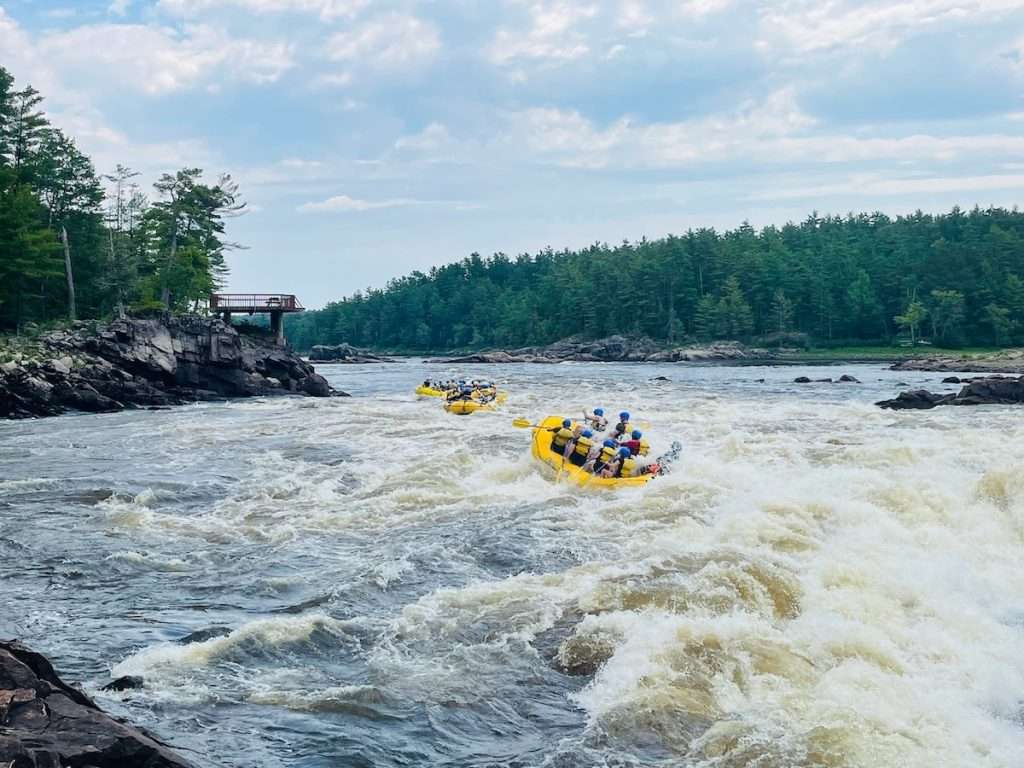
Age is not the gate here. The gate, if there is one, is which tier you choose. On our trip there were women my age, women older, families with kids, and a lovely woman from New Jersey who had travelled to Canada solo for the first time and picked white water rafting as one of her adventures. If she can come to another country by herself and climb into a raft, you can drive to the Ottawa Valley with your girlfriends.
And at the risk of sounding like a self-help guru, you are not the age your driver’s licence says. My friends and I have a whole philosophy about refusing to act our age, one that has cost us at least one collarbone. But trust me, that was chicken baseball, a far scarier experience than rafting and another story entirely. My point is, gauge your ability to do this by your nerve, not your age.
Is white water rafting scary? It looks worse than it is
Most of what looks terrifying about white water rafting is the camera angle. The photos are shot for drama, all spray and open mouths and white knuckles, and from the shore the rapids look like they want to swallow the boat whole.
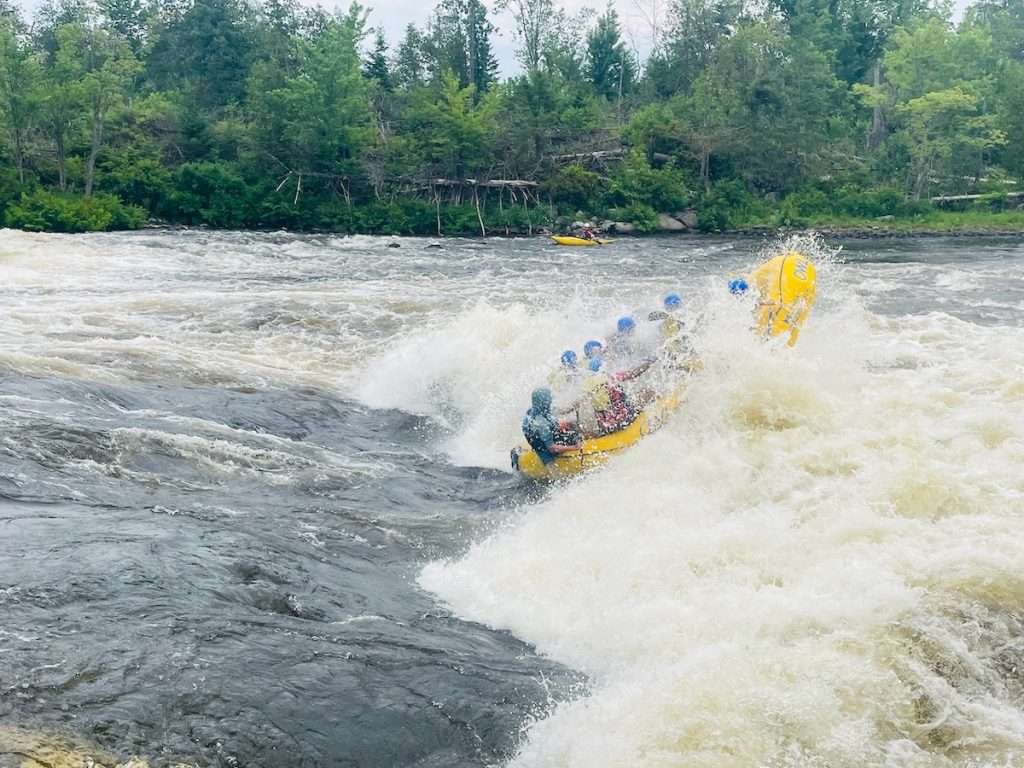
From inside the raft it’s a different story. You’re with a trained guide who has run that river more times than you’ve checked your phone this week. You have a paddle, a job to do, and a whole crew doing it with you. The fear, when it comes, lasts about four seconds into the first set of rapids, and then it turns into the kind of laughing you cannot fake. By the second rapid you are asking if you can do that again.
Scary is the wrong word. Exhilarating is the right one.
How hard is it? White water rafting for beginners, by tier
White water rafting is not one fixed level of terror you either survive or you do not. It comes in tiers, and you choose your own adventure.
Rapids are graded on a scale, roughly from gentle Class 1 water up to the Class 5 stuff that belongs to the adrenaline junkies and the professionals. A good outfitter offers a range, and OWL on the Ottawa River runs everything from lower intensity family floats to high intensity trips for people who want to be humbled by a river. Basically spicy to unseasoned.
I have done all of it over the years, the mild and the wild. For a true beginner, or for a group that spans a range of nerve, you start lower, get your confidence, and see how you feel. Nobody is throwing you into the deep end on your first run unless you specifically ask them to. The tier is yours to pick, which means the honest answer to how hard white water rafting for beginners really is comes down to this: as hard, or as easy, as you decide.
Do you need to be fit, or know how to swim?
You do not need to be an athlete. You need to be able to sit in a boat, paddle when the guide says paddle, and hold on when the guide says hold on. That is the fitness test. If you can carry your own groceries up a flight of stairs, you can raft.
Do you need to be a strong swimmer? No. Do you need to be able to swim at all? Yes, at least a little. You will likely end up in the water at some point, that is half the fun, and while your life jacket does the floating for you, basic comfort in the water matters. You do not need to be fast or graceful. You need to not panic when the river surprises you. If you cannot swim, or water genuinely frightens you, tell your guide before you launch and be honest about it, because that is information that keeps you safe, not a reason to be embarrassed.
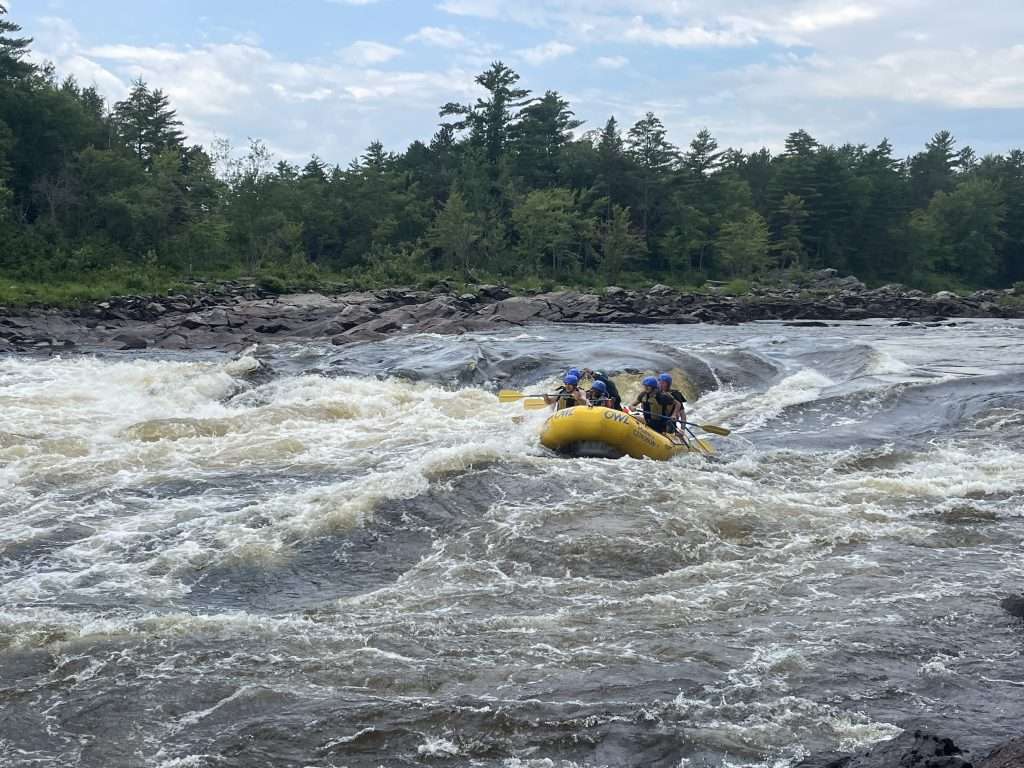
And one number worth knowing, OWL lists a weight requirement, 50 pounds for the gentle runs and 90 for the bigger water, and it is a minimum, not a maximum. It exists so small kids do not get bounced out of the boat, not to keep anyone out for being too much. If you have ever quietly wondered whether you are too big for a raft, you are not. The river does not care about your size, only that you showed up.
Every operator sets its own rules on minimum age and the rest, so check with OWL directly when you book, especially if you are bringing kids or anyone with a medical consideration.
What a day rafting the Ottawa River with OWL is actually like
You arrive, you get kitted out, and before you touch the water there is a briefing that covers the paddling commands, what to do if you end up in the drink (cool kids talk for falling in), and how to get back in the boat. Listen to it. It is short, it’s not scary, and it’s the difference between a great day and a flustered one.
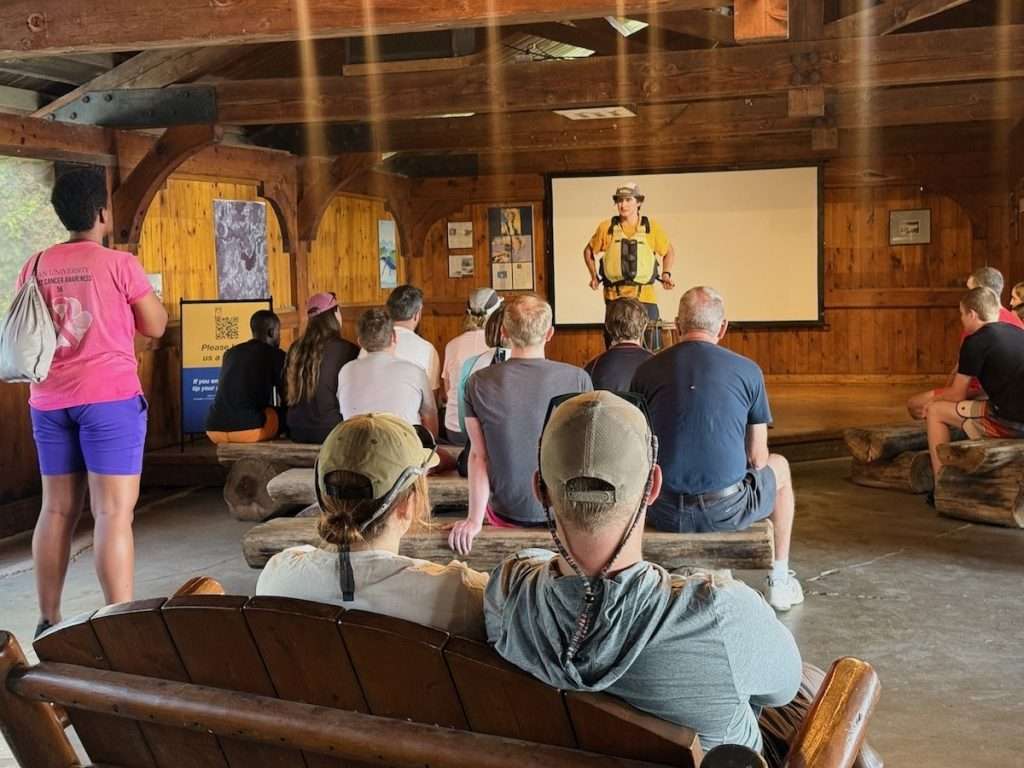
One thing to know going in, the river is dry. No drinking before or during the trip, which sounds strict right up until you are bouncing through a big rapid and glad every single person in your boat is wide awake and paying attention. Save it for the campfire after, when you have earned it.
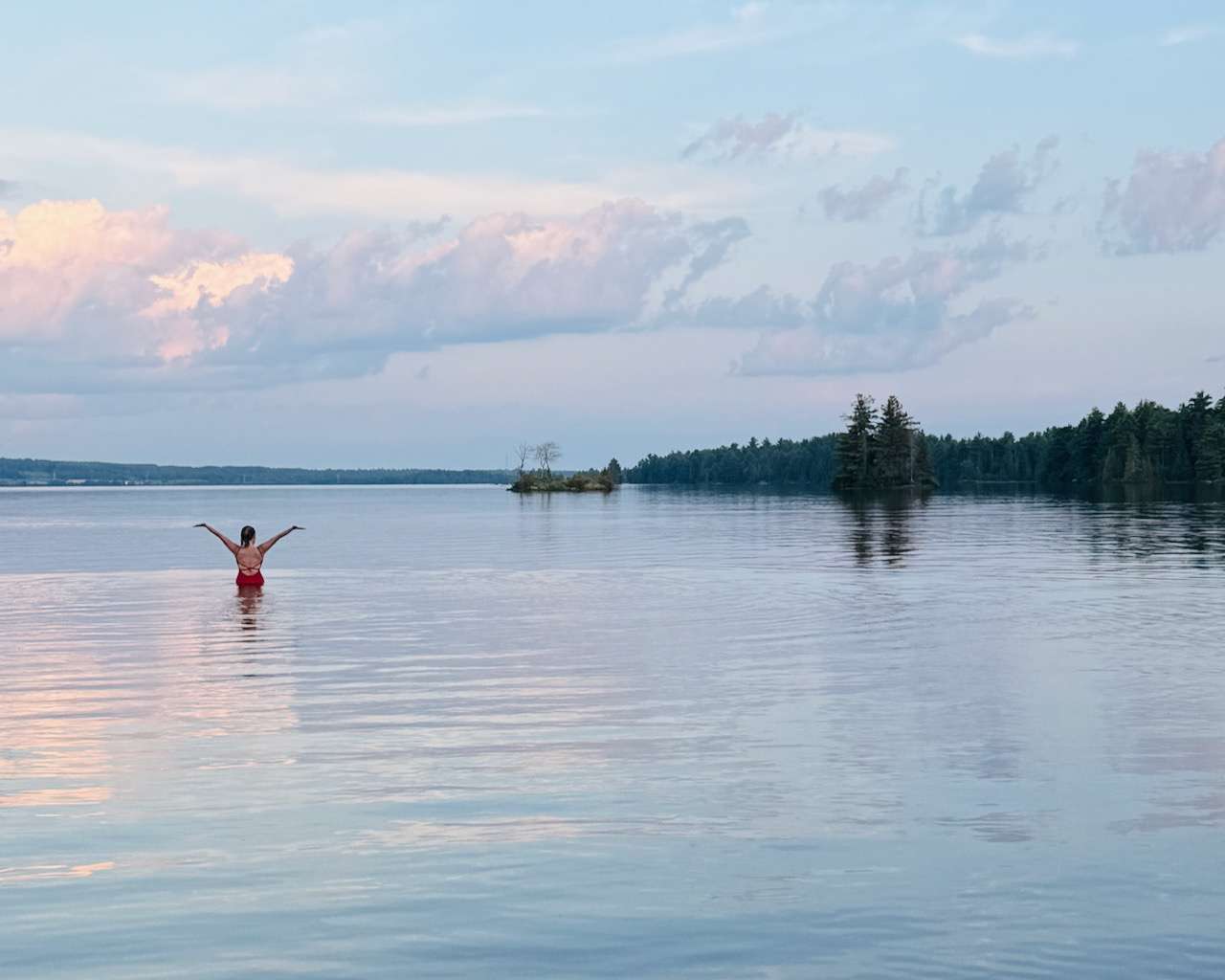
Then, a short bus ride and you’re on the Ottawa River, one of the great rafting rivers in the world, which happens to sit in our backyard. The rhythm of the day surprised me the first time. It is not hours of nonstop panic. It is bursts of shrieking, wonderful chaos through the rapids, and then long, calm stretches where you drift, catch your breath, trail your hand in the water, and remember you are floating through some of the prettiest country in Ontario.
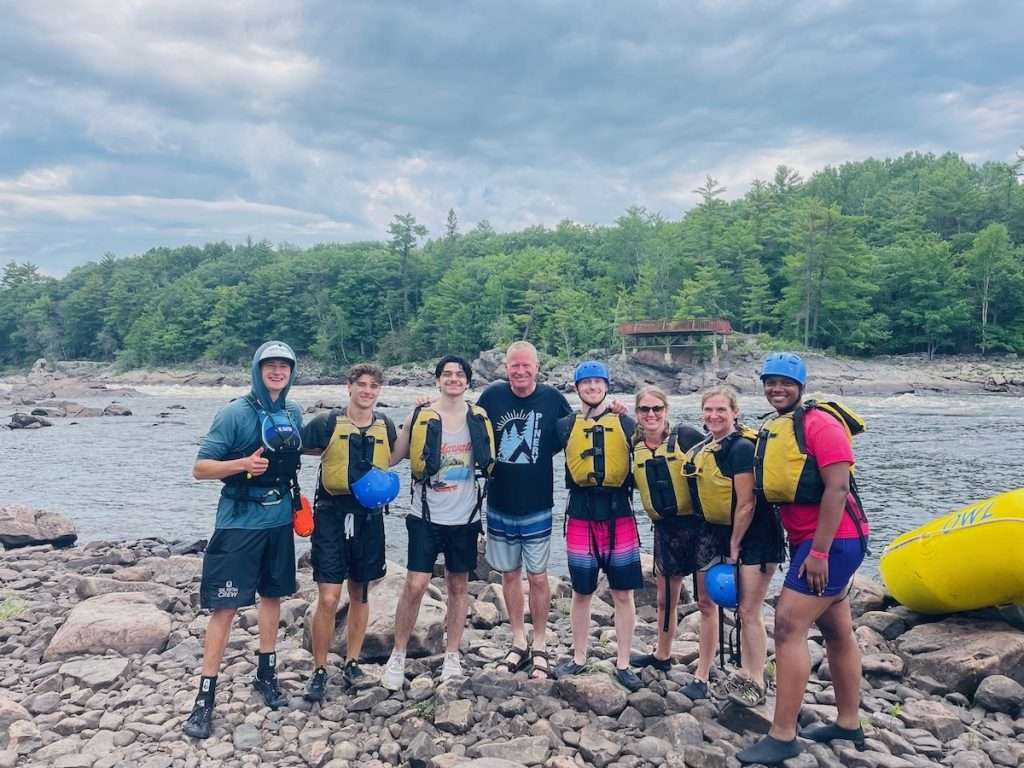
And the part I did not expect to love the most. Your phone stays behind. No signal, no scrolling, no checking anything. Just a full day on the water, clear rushing water, no engines, and a crew of people you like. I can’t remember the last time I went that many hours without a screen, and it did something to my brain I am still grateful for. It is also about as gentle on the earth as a thrill gets. Nothing burning fuel, just a river doing what it has done for ten thousand years and a few paddles helping it along.
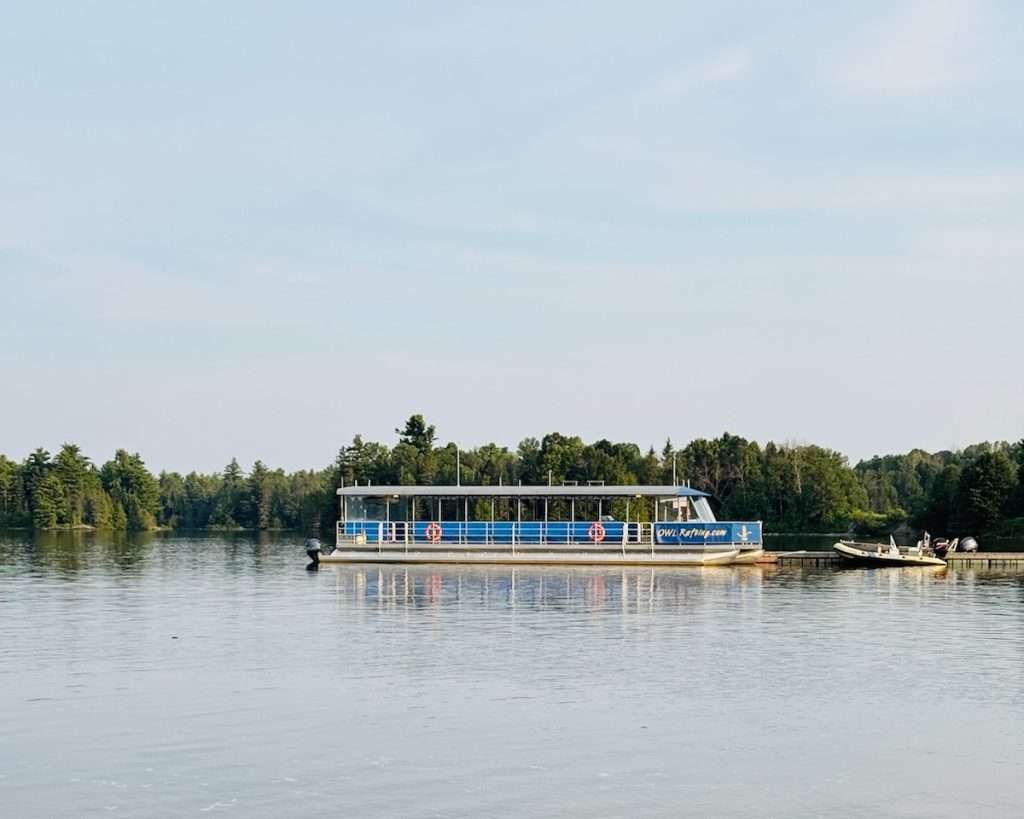
The day ends on a pontoon boat with a barbecue, and after hours of paddling and adrenaline you will be ready for it. Barbecue chicken, fresh salads, a full plate, and the specific kind of hunger you only earn on the water. It was the perfect ending, everyone tired and pleased with themselves, eating on the river as the day cooled off.
Where you actually sleep at OWL: cabana, cabin, glamping, or RV
If you are making a weekend of it, and you should, where you sleep matters more than the brochures let on. OWL is a resort, not just a launch point, and it gives you a few very different ways to spend the night. Here’s the breakdown.
The cabana is where OWL placed us, and it is the comfortable middle. Slightly bigger than a cabin, built for two, with sheets already on the bed and a toilet and sink right inside, which your bladder will thank you for at 2 a.m. They each have a deck that looks out over the water, and even though we went during a real heat wave, a ceiling fan kept the air moving and it was lovely to sleep in.
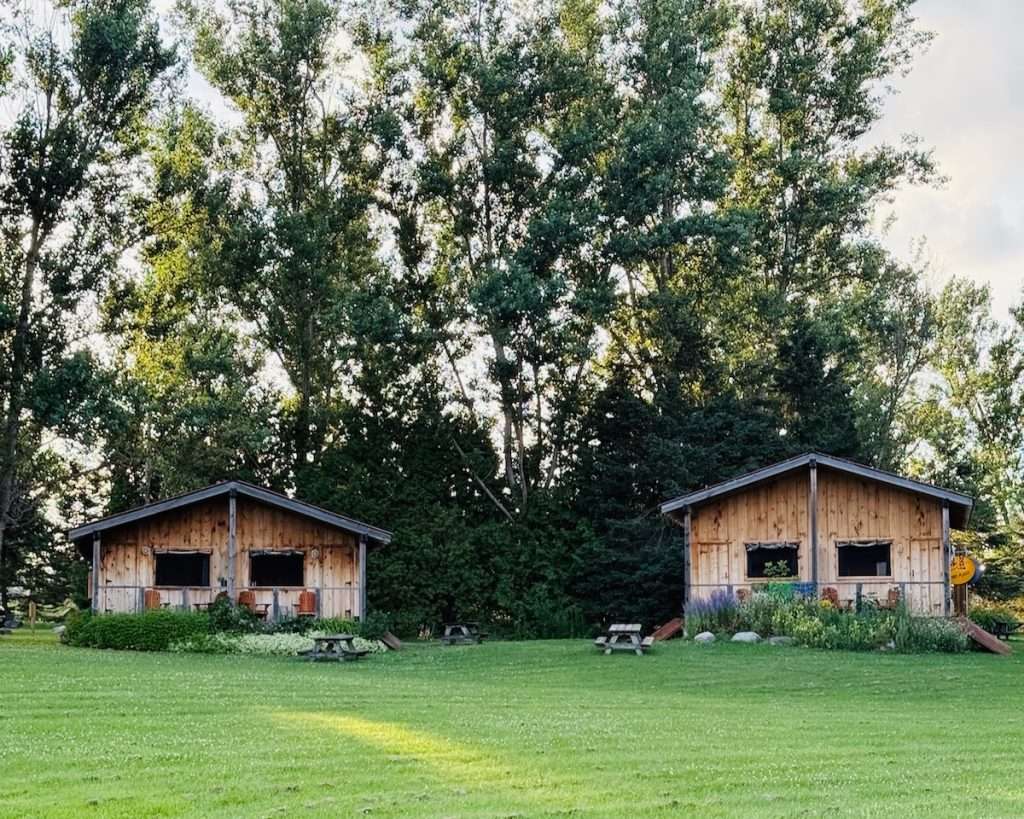
The cabin is a more rustic option. Mattresses on platforms, and you bring your own bedding. Pack a flashlight, because the bathroom is a walk and the middle of the night is dark out there.
The glamping tents sit a little apart from the main compound, which makes them the pick if you want quiet over social. If your group winds down early, or you just want to hear the river instead of the neighbours, that is where you go. And if you travel with your own tent, there are spots for those too.
Finally if you travel with your own wheels, there are spots for RVs and trailers too.
So you can rough it or you can be comfortable, and you can be in the middle of the action or off on the edge of it. Match the choice to your group, and know that a woman who likes a real bed and an ensuite, hello, has a home here.
Who goes rafting at OWL, and what you’ll eat
If your fear is that you will show up to a bus full of twenty-somethings chasing an adrenaline high and feel like somebody’s mother, let it go. Yes, there are young thrill seekers. There are also families, multiple generations rafting together, plenty of women’s groups like the one I am planning, and, as I mentioned, that solo traveller from New Jersey who could not have been made to feel more welcome. It is young at heart without skewing young. You will fit.
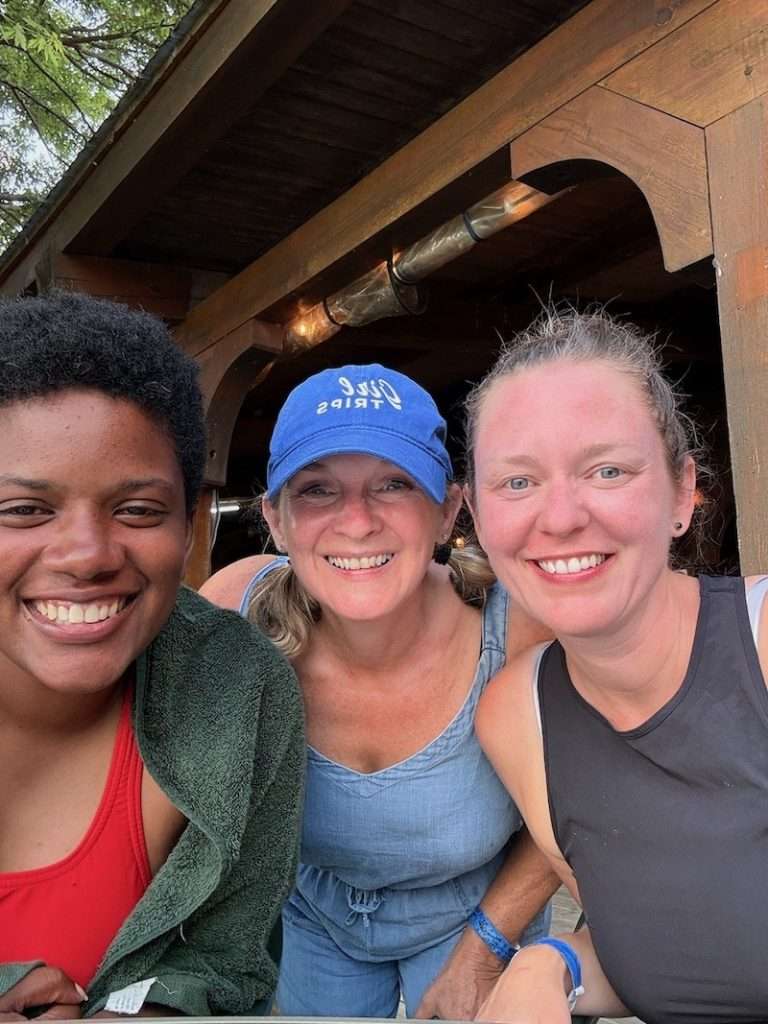
On the food, I’ll be straight with you, because that is the deal we have. The meals under the pavilion are honest home cooking, not fancy, the kind that does the job after a day outdoors without pretending to be a restaurant. Come hungry and you’ll be happy. Come expecting a Michelin star, and you have wandered into the wrong forest.
The standout, though, is that pontoon barbecue, chicken and salads on the water at the end of the day. If you’ll eat one meal there that you’ll remember, it will be this one. Perfection after a full day on the water.
Rafting with your girlfriends is the whole point
I was not on that river purely for the fun of it, though there was plenty. I was scouting. Because the truth I keep coming back to is that white water rafting is good, but white water rafting with your people is unforgettable. There is something about strapping into a boat together, screaming through a rapid, and washing up on the other side laughing that bonds a group in a way a nice dinner never will.
That is exactly why I was on the Ottawa River three weeks ago with OWL. I am building a Girl Trips Summer Camp adventure around this for 2027, a weekend for women who are done believing the good stuff is behind them, with the rafting, more upscale accommodations next door, the pontoon barbecue, and the friends to share it with. If you have read this far and felt even a flicker of yes, that trip is being built for you.
White water rafting for beginners: your questions, answered
Yes, when you go with a proper outfitter. You get a trained guide, a life jacket, a helmet on bigger water, and a safety briefing before you launch. Beginners raft the Ottawa River every day of the season.
Almost certainly not. There are gentle tiers for a reason, and I started at 43 and am still at it in my fifties. Age is not the barrier, the tier you pick is.
Do you need to be a strong swimmer? No. Do you need to be able to swim at all? Yes, at least a little. You will likely end up in the water at some point, that’s half the fun, and while your life jacket does the floating for you, basic comfort in the water matters. You do not need to be fast or graceful. You need to not panic when the river surprises you. If you can’t swim, or water genuinely frightens you, tell your guide before you launch and be honest about it, because that is information that keeps you safe, not a reason to be embarrassed.
Fit enough to sit, paddle when asked, and hold on. If you can manage a flight of stairs with groceries, you can manage a beginner run.
It looks far scarier from the shore and in photos than it feels in the boat. The nerves usually last about one rapid.
OWL runs both full day and half day trips. A morning briefing puts you on the water by mid-morning and back at the resort by mid-afternoon, in time for the pontoon barbecue. Afternoon and shorter options are available too, so you can build the day around your group.
Quick dry clothing, a bathing suit, and water shoes or sandals with a back strap. Bring a towel and a dry change of clothes for after. Avoid cotton, because once it is wet, it stays wet. Slap on waterproof sunscreen, and for your face I would go pure zinc, because the river is basically a power wash and everything else comes off. Do not bother with makeup, it is not surviving this trip and neither is your dignity, which is rather the point. Leave the good jewellery at home and tie your glasses on, because the river keeps whatever it takes. Most outfitters provide the helmet and life jacket.
The guided season on the Ottawa River runs seven days a week, roughly May through September. Book inside that window if you want an outfitter and a crew, because most operators close up at the end of September. Check OWL for exact dates.
On the Ottawa River at Foresters Falls, in the Ottawa Valley, about ninety minutes from Ottawa.
(Updated July 2026.)
Disclosure: OWL Rafting hosted my stay so I could scout it for a Girl Trips getaway. They covered the cabana, the meals, and the rafting. They did not cover my opinions, which remain gloriously my own and, as my collarbone-breaking friends will confirm, impossible to buy.
 A Vacation Isn’t a Place You Go