

Despite declining numbers, far too many of us are still asking, or trying to justify: should Canadians travel to the US? I get it, I do. Old habits die hard. For decades, Canadians travelling to the US was second nature, often feeling more familiar than travel within our own country. But when Trump started to threaten our sovereignty, hit us with tariffs, and made false claims about our border, an organic movement to avoid the US took root.

And it’s been working, as a great many of us collectively agreed it was time to pump the brakes. Canadian travel to the U.S. continues to drop, and rightly so. But now, just as things are reaching peak volatility, and the squeeze is being felt, the U.S. travel industry is trying to lure us back; offering “deals,” marketing blitzes, and grinning influencers pretending everything’s hunky-dory for a sponsored stay.
Some U.S. governors are practically rolling out the red carpet for Canadians, hoping we’ll forget what’s happening. But we shouldn’t. We need to give a hard no, and a very stern side-eye, to anyone who’s more interested in a cheap trip or a brand paycheque than in standing up against what’s clearly, visibly, dangerously wrong.
Ask yourself: what are we really supporting when we cross that border? And who are we leaving behind when we do?
I’ve built a career, and a life, around travel. Florida? I’ve been at least 15 times. Miami, Disney, the Keys? It’s always been an easy escape from our long Canadian winters. But not anymore. Not while the state is being run by Ron DeSantis, whose policies are just as extreme as Trump’s, and often slip under the radar because Trump can’t stand if he isn’t the headline every day.

California? I love it. If any state feels like the U.S. version of Canadian chill, it’s them. But even in blue states, you’re still crossing into a country where Canadians are being interrogated at the border and journalists are being fired for criticizing the government.
And New York City? Don’t get me started. I adore it. I want Broadway to thrive, and for NYC to stay bold, creative, and inclusive. But supporting that vision doesn’t mean propping up the same national system actively trying to silence it.
If you really love America, if you care about what it could be, then you’ll stay away while she works her shit out.
Should Canadians Travel To the US? No, and Here’s Why
The answer to whether Canadians should travel to the US is no longer just a personal question. When you cross that border, you are impacting all of us.
Should Canadians Travel to the US? Not If Safety Matters.
Since this post was first published in June 2025, the situation has only gotten worse and more documented. The question of whether Canadians should travel to the US is no longer hypothetical. For hundreds of Canadians, it’s become deeply personal.
An estimated 207 Canadians have been held in ICE custody at some point since Trump took office in January 2025, compared to just 130 in all of 2024. And a growing number of those detained have no criminal record whatsoever. Nearly 44 per cent of Canadians detained in the latter part of 2025 had no criminal record or pending charges against them, according to the Globe and Mail.
Among those caught in the net: at least six children, including a Canadian toddler held for 51 days at a remote facility in Texas. That’s more than double the 20-day limit set by a U.S. court order for children in custody. There’s no way to be “ok” with this.
Then there’s Jasmine Mooney, a B.C. actress and entrepreneur who was shackled and detained for nearly two weeks after trying to renew a work visa at the Tijuana crossing. She had done nothing wrong. An officer told her to her face: “You didn’t do anything wrong, you are not in trouble, you are not a criminal.” And then they detained her anyway. Before her release, B.C. Premier David Eby said publicly that her case “reinforces anxiety that many Canadians have about our relationship with the U.S. right now, and the unpredictability of this administration.”
And Cynthia Olivera, a Canadian woman who went to a routine immigration interview in Los Angeles with her husband, was put in handcuffs and swept away. “They lured us into our immigration appointment and took my wife,” her husband Frank said. “They didn’t even give us an opportunity at the interview. Nothing.” She was held at a detention centre in El Paso.
Paula Callejas, a 45-year-old Montreal woman, was in Florida trying to grow her swimsuit business when she was arrested on a misdemeanor charge and handed directly to ICE. She spent over three months bouncing between detention facilities (El Paso, Arizona, Florida) while her family racked up $25,000 in legal fees trying to get her out. “She’s not a criminal,” her mother said. Nobody disputes that.
And then there is Johnny Noviello, a 49-year-old Canadian citizen who had lived in the U.S. for nearly 40 years. He died in ICE custody at a Florida detention centre in June 2025, having reported feeling “sad and depressed” and told staff he hadn’t eaten in a while. His lawyer described him as “a very polite, quiet, unassuming man.” He is not coming home.
There’s also the situation at the Ambassador Bridge in Detroit, where people who accidentally drove onto the bridge were detained, fingerprinted and held. At least 90 per cent of detentions there were people who simply made a wrong turn.
And it isn’t only non-Indigenous Canadians at risk. The Assembly of First Nations issued a formal warning after reports of Indigenous Canadians facing increased scrutiny and detainment at the U.S. border, including a First Nations man whose status card was seized by ICE. AFN National Chief Cindy Woodhouse Nepinak said the organization is “deeply concerned regarding the ongoing harassment and blockage of First Nations people attempting to cross the Canadian-United States border.” A treaty right that has existed since 1794 is apparently no longer a guarantee.
Global Affairs Canada has updated its travel advisory multiple times. It now explicitly warns that CBP may search your electronic devices at the border. “It should give all Canadians pause about travelling to the United States right now,” says Sharry Aiken, a law professor at Queen’s University, “because it basically tells us that there’s a real risk.”
These are not isolated incidents. They are a pattern.
The Delusional Political Rhetoric
Let’s talk about the ever-shifting justifications for why Trump is coming after Canada, because they have become genuinely unhinged.
It started with fentanyl. Canada, he claimed, was flooding America with the drug. Except that Canada’s own government data shows that less than one per cent of fentanyl seized in the U.S. comes from our border. Over 600 times as much comes from the southern border. The claim was so completely fabricated that even Trump eventually moved on from it.
Then came the sovereignty play. Annex Canada, make us the 51st state, we’d get lower taxes and better healthcare under his benevolent rule. When Trudeau said there wasn’t “a snowball’s chance in hell,” Trump threatened tariffs. When Carney won the election and pivoted Canada’s trade relationships toward the rest of the world and China, Trump threatened 100 per cent tariffs.
And then he warned us that if Canada does business with China, China will “terminate ALL ice hockey being played in Canada and permanently eliminate the Stanley Cup.”
The Stanley Cup.
Take all the time you need with that one.
This is the man whose policies you’re endorsing with your resort booking in Scottsdale. This is the geopolitical vision you’re bankrolling with your Disney ticket. A man ranting on Truth Social about China stealing our hockey, while his agents are shooting American citizens dead in the streets of Minneapolis for trying to protect their neighbours.
We used to say you can’t make this stuff up, but apparently you can. And apparently some of us are still booking flights.
The bottom line? This is all part of Trump’s chaos strategy. He thrives on division, fear, and control. And every time we act like it’s still business as usual, every time we ponder should Canadians travel to the US like it’s a neutral question, we help him win.
If it sounds like fascism and smells like fascism, maybe stop fuelling it with your travel dollars
Why Canadians Travelling to the US Hurts Our Leverage
Let’s talk about the one argument that seems to cut through even the most committed justifiers: money.
In 2024, Canadian tourists spent $20.5 billion USD in the United States. Canadians made up 28 per cent of all international tourists to the country. That is an enormous amount of leverage. And Canadians have been using it.
The U.S. Travel Association forecasts a 3.2 per cent decline in international tourism spending for 2025, a loss of $5.7 billion USD, and largely attributes it to the drop in Canadian visitors. Canadian visits to the U.S. fell 23 per cent in the first seven months of 2025 compared to the same period in 2024, according to Statistics Canada. Air travel down 24 per cent. Vehicle crossings down 30 per cent, for ten straight months.
The numbers on the ground are even more vivid. In New Hampshire, Canadian visitors dropped 30 per cent and campground reservations were down 71 per cent in the first five months of 2025. One hotel in North Conway reported empty rooms during weekends that usually sell out. In Montana, a single Canadian sports team cancellation cost one hotel $38,000 USD and a 200-person dinner. In Florida, motel owners are reporting their worst season ever, worse than COVID.
When people ask you whether one person’s travel choices really matter, show them these numbers. Your dollar is not just a dollar. It’s part of a $20.5 billion negotiating chip that is rightfully, and powerfully, being used.
Travel Is Political (Whether You Like It or Not)
There’s a refusal in some circles to acknowledge that where you spend your travel dollars matters. Tourism is one of the biggest economic drivers in the U.S., and every dollar you spend there supports the systems in place, including the ones working overtime to suppress women’s rights, erode LGBTQ+ protections, dismantle public education, and criminalize healthcare decisions.

And yes, we know many Americans didn’t vote for Trump. That’s exactly the point.
Here’s what people get wrong when they say “but I’m going to support the good Americans.” You’re not. You’re actually doing the opposite. Every tourism dollar you spend props up the same economic system that is being used to crush them. The tax revenue, the jobs numbers, the GDP talking points, these are the very things the Trump administration points to as proof that everything is fine, that the world still endorses America, that there are no real consequences for what’s happening. Your vacation becomes evidence that there are no consequences.
The Americans who are fighting for democracy right now don’t need your resort booking. They need the pressure to build. They need the economic pain to become undeniable. They need the numbers to get bad enough that even people who don’t care about human rights start caring about their bottom line. That’s how change happens.
If you genuinely love America and the people in it who are fighting like hell right now, the most powerful thing you can do is stay away and stop propping up the tourism economy that funds MAGA-aligned states.
So when people ask, “should Canadians travel to the US,” the answer has to be no, not while human rights are under attack. The message is clearer than ever: skip the States, at least for now. Not forever. Just for now. You’re not abandoning them. You’re helping them resist.
But I Don’t Do Politics
Sure you do. You just do it quietly, with your Visa card.
“I don’t do politics” is what people say when the status quo is working for them. When it stops working for them, when their rights are on the line, when their safety is threatened, suddenly politics becomes very relevant, very fast. The difference is that right now it’s other people’s rights being dismantled, and some of us find that a lot easier to look away from.
And let’s address the “what about China?” crowd, because this argument comes up every single time, like clockwork. Yes, China has a complicated human rights record. Yes, there are legitimate ethical conversations to be had about travel there. But here’s the difference: China is not actively threatening to annex Canada. China is not calling our Prime Minister a “Governor.” China has not slapped us with punishing tariffs while claiming we’re a fentanyl pipeline. China is not detaining our citizens at its borders for having the wrong phone contacts. There is exactly one country on earth right now that is doing all of those things to us specifically, and it is not China.
This isn’t complicated. It isn’t nuanced. It isn’t “tricky.” It’s actually one of the clearest ethical questions Canadians have faced in a generation: do you spend your money in a country that is openly hostile to yours, or do you not?
Choosing comfort over country is a choice. Own it. But don’t dress it up as complexity when it isn’t. And don’t be surprised when your fellow Canadians remember who showed up, and who didn’t, when it actually mattered. The north remembers is no joke.
Stop Doing Mental Gymnastics to Justify It
Let’s talk about the excuses. Because they are becoming increasingly wild.
“I’m just going to Disney, not getting involved in politics.”
Come on. Disney doesn’t get a pass. Disney owns ABC, which just fired journalist Terry Moran for criticizing Trump on social media. That’s censorship. That’s fascism. That’s not neutral. You can’t separate the mouse from the mayhem.

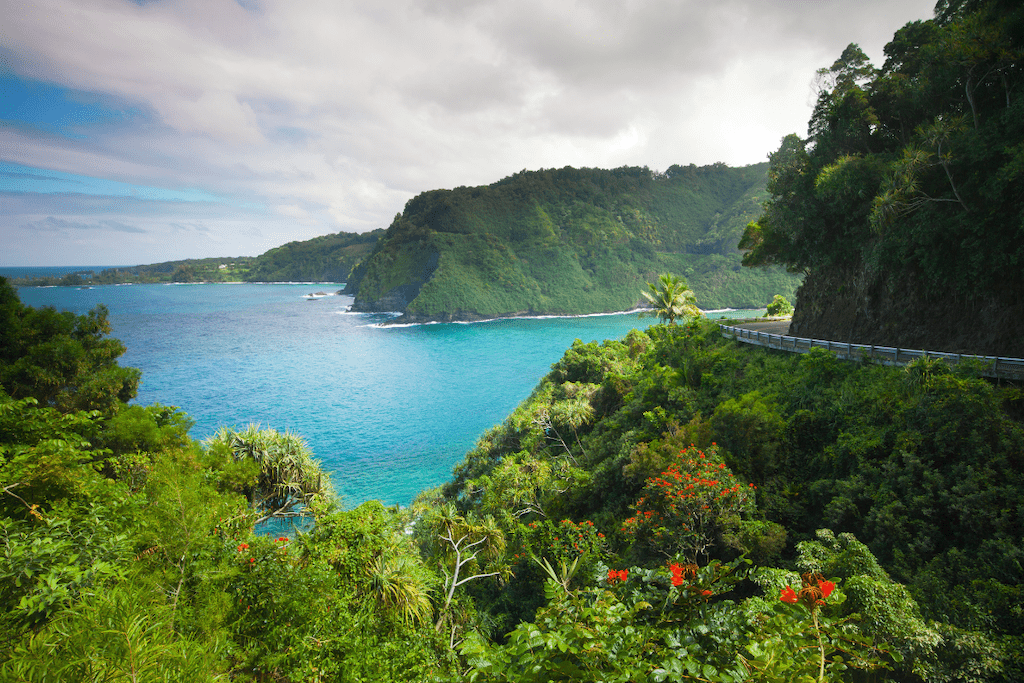
“I’ve always wanted to go to Hawaii.”
Of course you have. It’s on my bucket list too. But let’s be clear: travelling to Hawaii right now means double-dipping in oppression. You’re supporting a country actively sliding into authoritarianism and upholding the long-standing colonial harm done to the Hawaiian people. It’s not a harmless vacation, it’s a choice you’re making with far-reaching consequences.
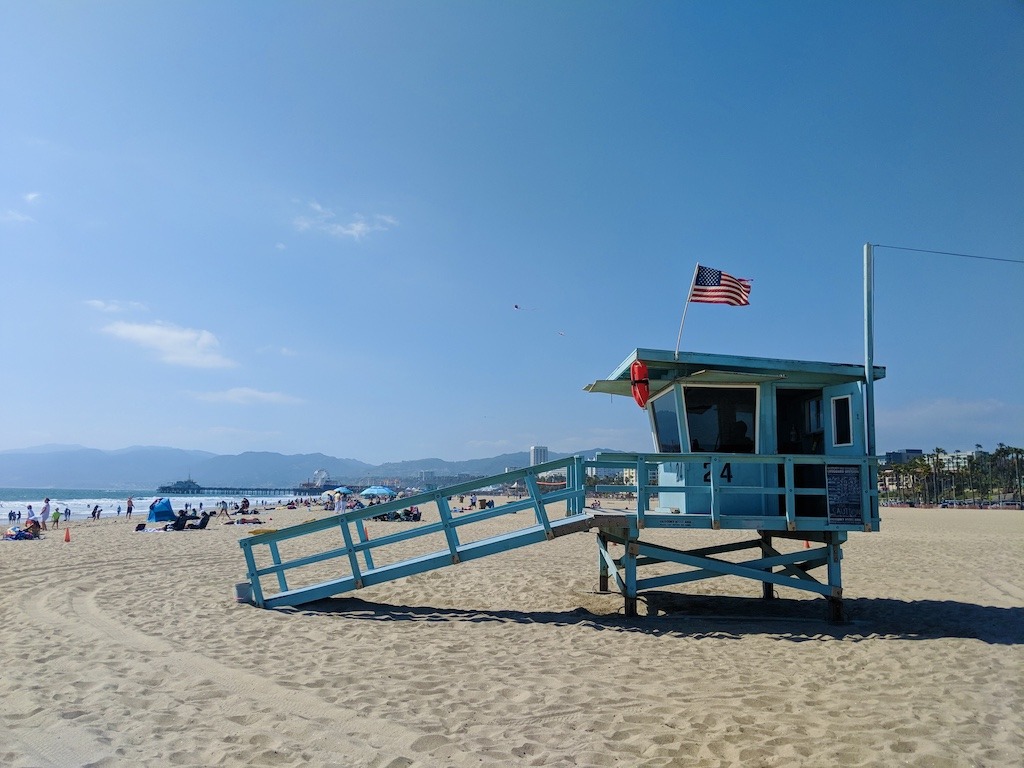
“But California is so blue.”
It is. And I love California for fighting back as hard as it has. But here’s the thing: to get there, you still have to cross an increasingly hostile international border where Canadians are being detained, fingerprinted and questioned. And once you’re there, every dollar you spend still flows into the federal tax base that funds ICE, funds Operation Metro Surge, and funds the system that killed Renée Good and Alex Pretti in Minneapolis. California can’t opt out of that. Neither can you.
“But I have family there. Or property. Or obligations I can’t just cancel.”
If you have genuine family ties, a sick parent, a wedding, a child you share custody with, nobody reasonable is telling you to choose politics over the people you love. That’s not what this is about.
But if “I have family there” has quietly expanded to cover a golf trip, a long weekend in Palm Springs, or a shopping run across the border, you’re not being honest about it. There’s a difference between obligations you genuinely can’t avoid and comfort you’ve decided to frame as necessity.
As for property, that’s genuinely complicated and nobody can make that call for you. What you can control is where your discretionary dollars go once you’re there, and whether you’re making additional trips that aren’t actually required.
Nobody is perfectly consistent in a situation this messy. But there’s a difference between doing your best and not trying at all.
If you’re twisting yourself in knots to justify a trip to the US, that’s your gut trying to tell you something. The excuses are paper thin, and no one’s buying them. And if you’re a travel influencer still playing coy with “should Canadians travel to the US” like it’s some neutral question, you’re part of the problem.
Skip the States
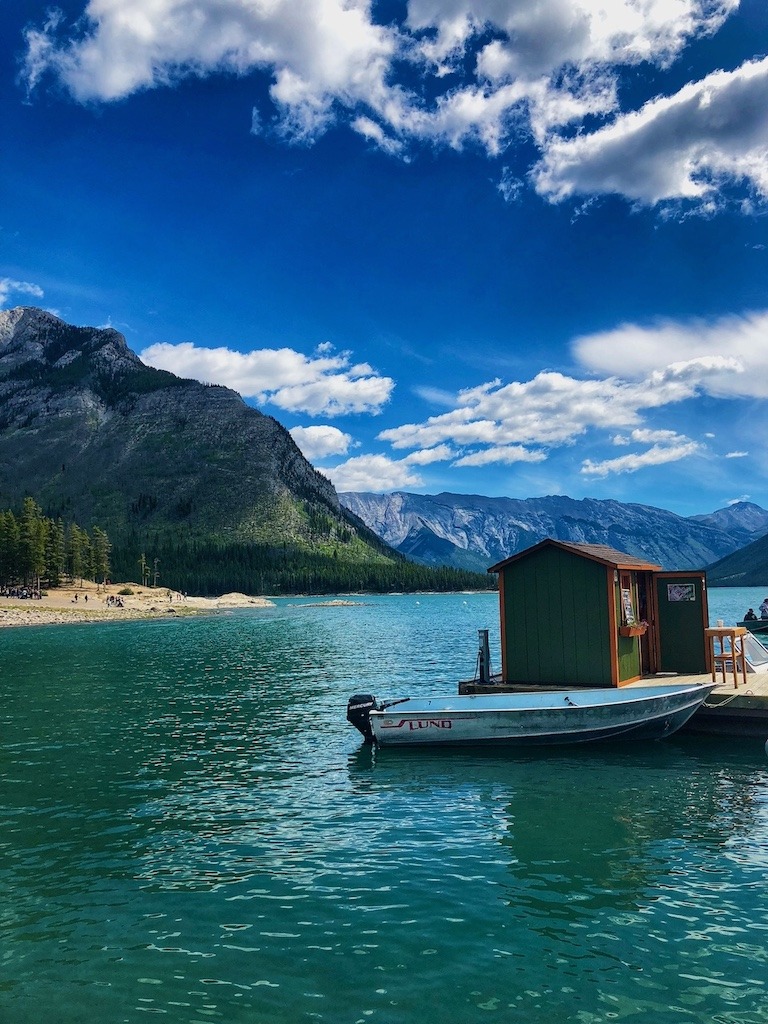
Canada is calling. And honestly, it’s been waiting for this moment.
Coast-to-coast ideas that prove you don’t need to cross a hostile border to have a memorable, meaningful trip.
Explore Canadian alternatives →Where to Travel Instead
Canada is stunning. We’ve got world-class national parks, vibrant cities, rich Indigenous culture, coastal drives that rival any on the planet, and food that reflects the best of our multiculturalism. Want beaches? Try Prince Edward Island or Tofino. Craving culture? Head to Montreal, Québec City, or St. John’s. Need nature? British Columbia, Alberta, and the Yukon are calling.
And the rest of the world? It’s showing up. Canadians are redirecting their travel dollars in a big way, with Caribbean destinations like Turks and Caicos up 350 per cent and Saint Lucia up 116 per cent year-over-year, according to Flight Centre Canada. Europe now ranks as the top international choice for Canadians, with 25 per cent naming it their number one destination. Japan is up 88 per cent, driven partly by the fact that a Tokyo family trip, including a day at Tokyo Disneyland, can cost less than a week at Disney World in Orlando. The world is not short on options. It never was.

If you’re dreaming of sun and warmth, Mazatlán, Mexico is having a genuine renaissance right now and is one of the best value destinations for Canadians. I’ve been, I loved it, and I’ve written everything you need to know before you go. The Eastern Townships of Quebec are also stunning and wildly underrated for a weekend escape closer to home.
There are also international destinations that align more closely with democratic values and safety for travellers: Ireland, The Islands of Tahiti, Italy, and France, to name a few.

Travel with backbone
Derry, Northern Ireland knows a thing or two about standing up.
If you’re looking for a destination with heart, history, and a fierce sense of solidarity, Derry delivers. It’s also just really good craic.
Plan your day in Derry →Finally: Should Canadians Travel to the US? You Already Know the Answer.
If you’re feeling personally called out by this, good. If you feel like you’re being judged, excellent. That’s the point.
We can’t keep shrugging off responsibility while the world burns. Americans who are fighting for democracy need you to support them, and the best way to do that right now is to withhold your travel dollars from the system they’re up against.
When this nightmare is finally over — and it will be — I can’t wait to return to the U.S. I want to shower my American friends with love, laughter, and travel dollars. But now is not that time. Should Canadians travel to the US right now? No. Not while the people we love are fighting like hell to hold on to what’s left. Right now, the most powerful thing we can do is stand with them by staying away. You’re not abandoning them, you’re helping them resist.
So no, you don’t need that cheap flight to Florida. You need a backbone.
Updated with new information March 15, 2026
 Touch Grass, Canada! It’s Free This Summer
