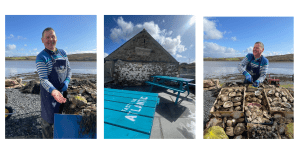
Before I visited Ireland, two things rarely crossed my lips: whiskey and oysters. I assumed I just wasn’t a fan. Turns out I had impeccable taste all along — because Irish whiskey and Irish oysters are absolute gold standards in their categories, and no amount of Irish hyperbole is sneaking into that statement.
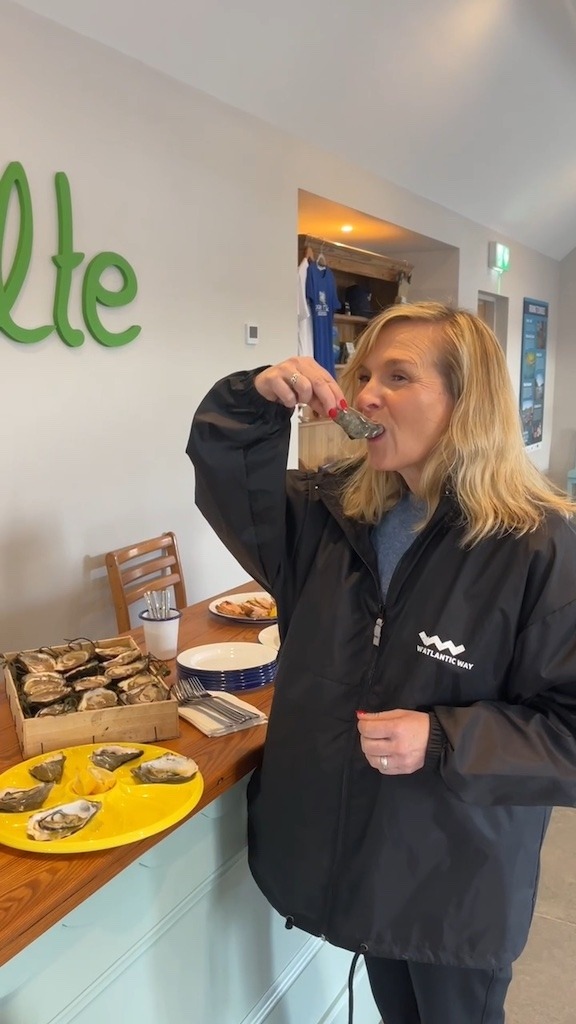
Oysters probably aren’t the first thing that comes to mind when you think of Ireland—I know they weren’t for me. But one visit to Croagh Patrick Seafoods on Clew Bay, just outside Westport, will turn even the most skeptical oyster avoider into a devoted fan. You might even start considering yourself a mollusc aficionado. Regardless of your starting point on the oyster appreciation spectrum, one thing is certain: you’ll fall head over heels for Padraic Gannon, the owner, whose family story breathes life into this amazing place.
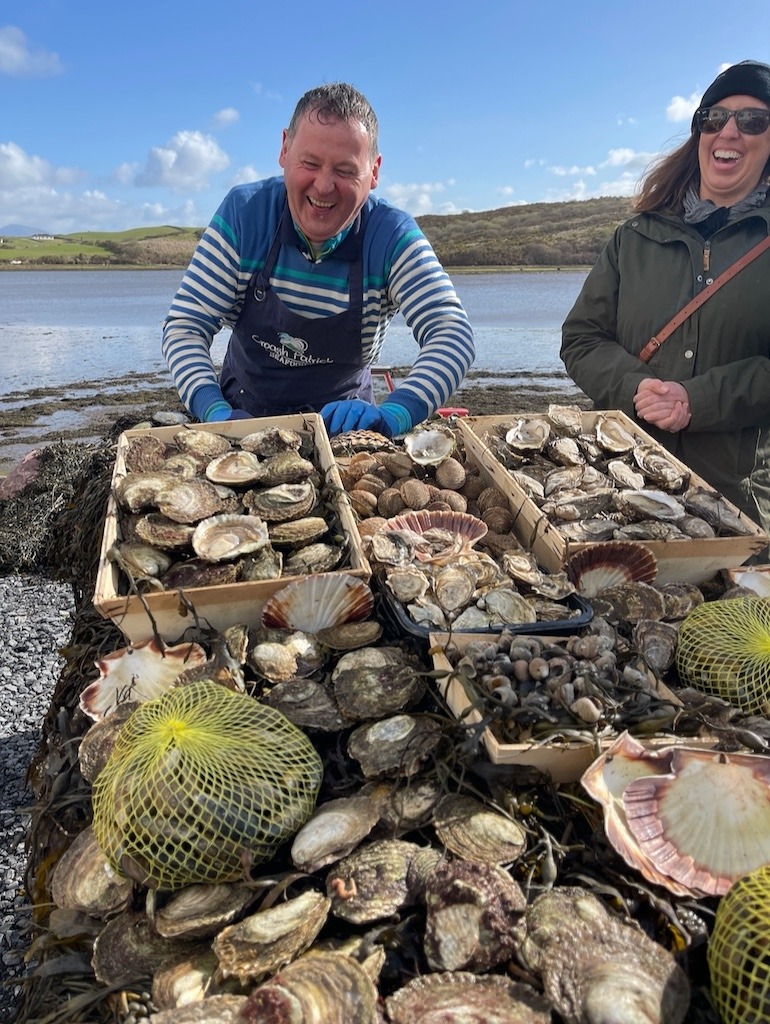
Padraic (pronounced Paw-drig for the uninitiated—don’t worry, Eoghan and Maedbh are next-level challenges, but that’s a story for another day) has spent his life on the family farm along the Wild Atlantic Way, with the ocean as his playground. You can tell he’s living his best life the moment you meet him—his Irish eyes, at the risk of being cliché, are smiling. And honestly, who wouldn’t be happy with the Atlantic as their backyard and the majestic Croagh Patrick mountain standing watch over your home? There’s just something undeniably magical about the Gannon family farm.
From Land to Sea: The Gannon Family’s Oyster Legacy
For generations, the Gannon family worked the rugged shores of Clew Bay along Ireland’s Wild Atlantic Way. Back then, the family’s livelihood revolved around dairy and mixed farming. Padraig’s father and grandfather ran a small herd of milking cows, supplementing their income by harvesting seaweed from the seashore—a tradition that continues to this day. (Fun fact: feeding cows seaweed can actually reduce their emissions. Talk about farming with a conscience!)
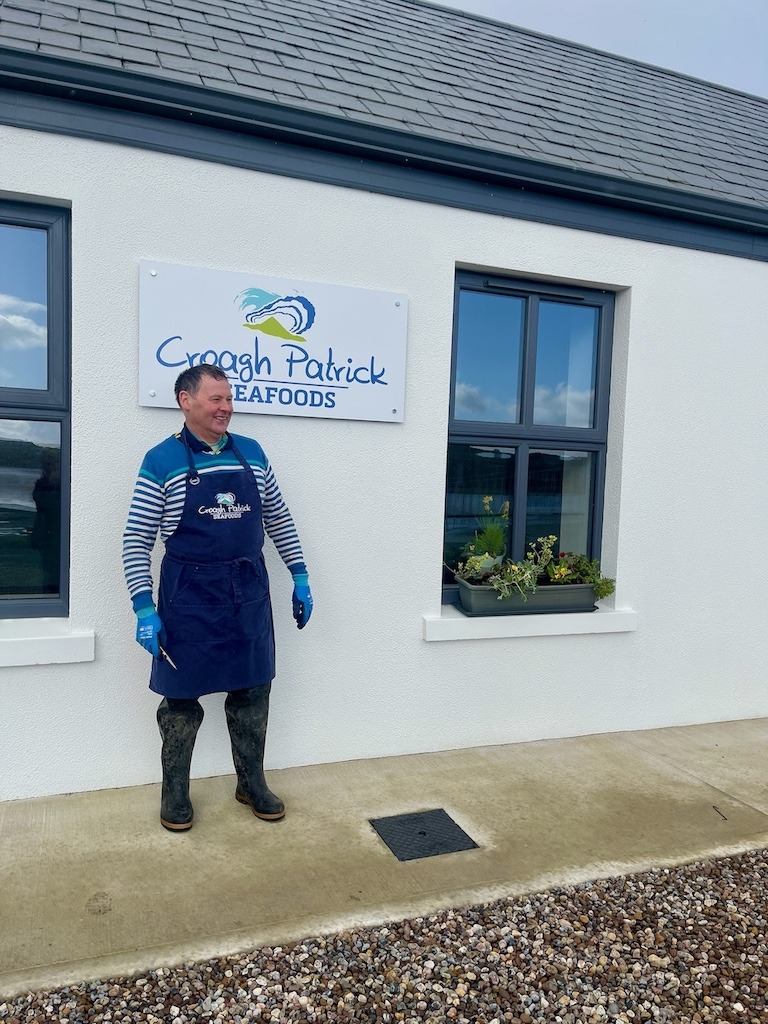
But making a living from their modest acreage wasn’t easy, and like many in the region, seasonal emigration felt like a looming possibility. Padraic, however, had other ideas. With a deep connection to Clew Bay and the Atlantic’s pristine waters, he saw the potential in aquaculture and decided to take a bold leap.
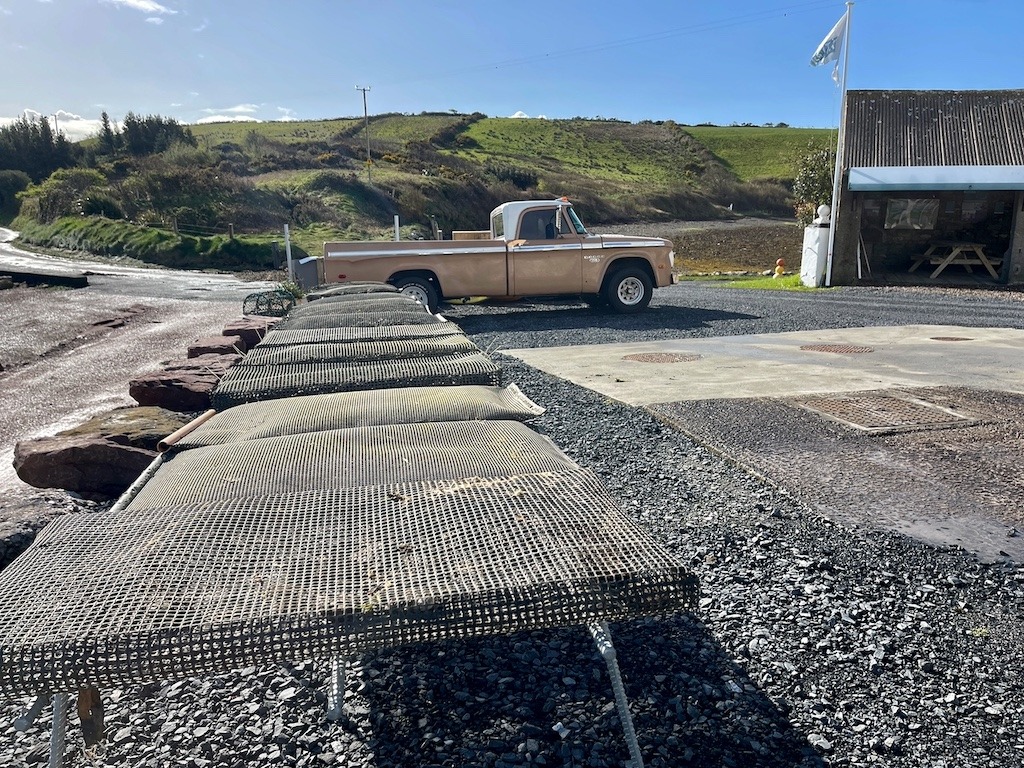
Padraic was one of the pioneers who revolutionized oyster farming in the area, transforming the family business from land-based farming to cultivating oysters in the pure Atlantic waters. This wasn’t just a shift in how they worked—it was a game-changer. Today, Croagh Patrick Seafoods thrives as a family business, supplying premium oysters to domestic and international markets.
But oysters aren’t the only treasures they farm. The Gannons still harvest seaweed, now with an even greater purpose, and have expanded to include periwinkles as well. It’s a beautiful blend of tradition and innovation, with a little bit of Irish magic sprinkled in.
Why Irish Oysters
Have you been to Ireland? The whole place practically oozes magic, so it’s no shock that the waters surrounding it produce some of the finest oysters in the world.
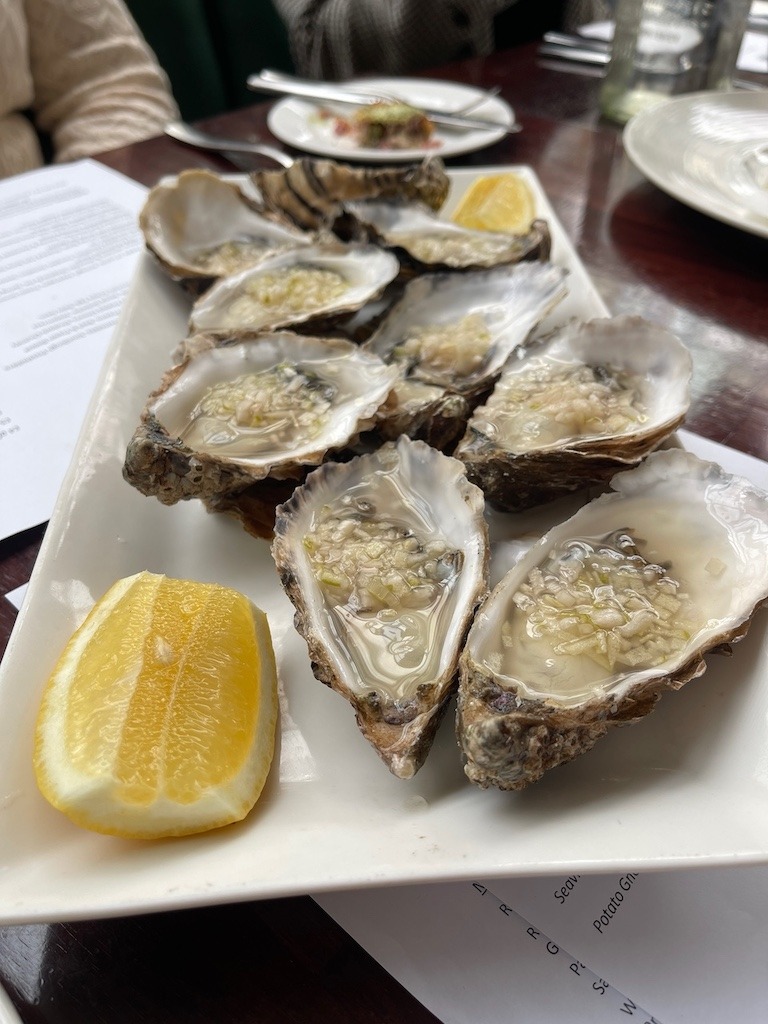
Once considered a common food, oysters are now firmly in the luxury category, which oddly, makes me giggle a little. It reminds me of my grandmother, whose roots were planted on the Atlantic’s other side in Cape Breton. She used to tell us how, as a child, they’d close the windows when they cooked lobster so the smell wouldn’t get out—it was considered a poor man’s meal. Imagine our ancestors’ faces if they could see us now, snapping selfies with oysters and lobsters like we’ve struck gold! And well, if it’s Atlantic lobster or Irish oysters, you kind of have.
In the 1970s, Clew Bay bustled with hundreds of small boats harvesting oysters daily. It was a vital source of food and income for locals, but overfishing, particularly in the 1980s, took a toll on wild oyster stocks. Many turned to other industries, but a handful of visionaries like Padraic sought a sustainable solution: oyster farming.
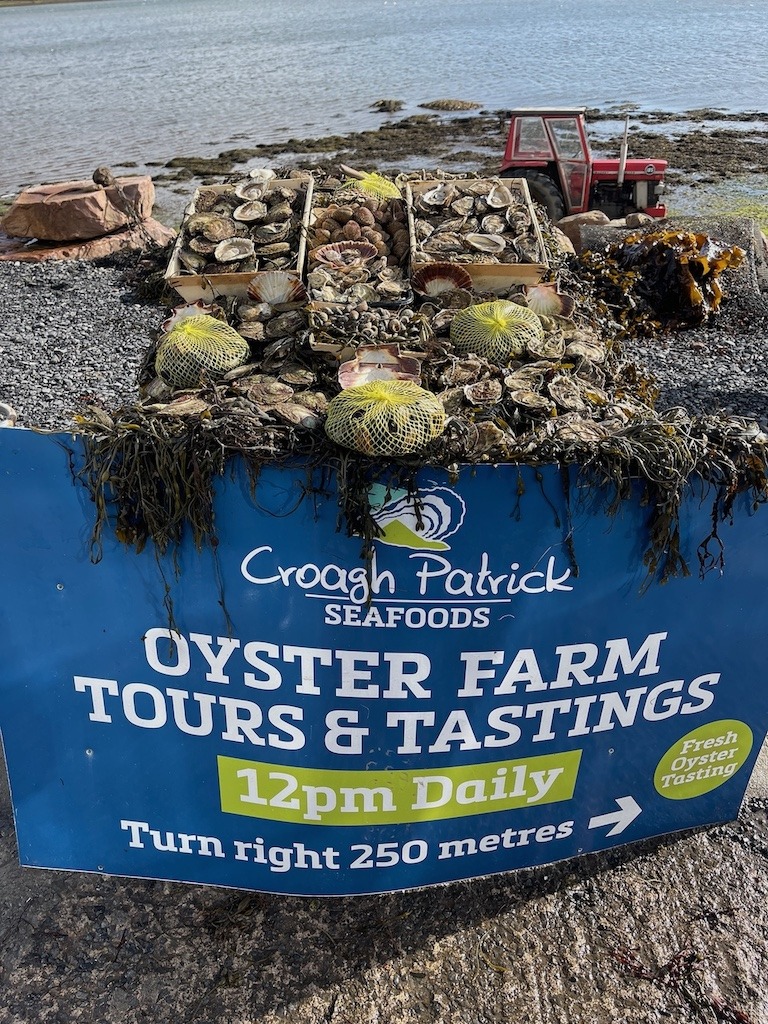
And what a solution it has turned out to be. The cold, nutrient-rich waters of the Atlantic, combined with an abundance of plankton, create perfect growing conditions for oysters. Irish oysters stand out for their high meat content and their distinct briny flavour—a taste so special it feels like you’ve captured the ocean on your palate.
Native vs. Pacific: The Two Types of Irish Oysters
Not all Irish oysters are the same, and knowing the difference makes you look like you know what you’re doing when you order.
Native flat oysters (Ostrea edulis) are the original — round, flat-shelled, and intensely briny with a complexity that takes a second to settle on your palate. They have a longer growing season and are considered a delicacy. In Clew Bay, native oysters have been part of the ecosystem for centuries.
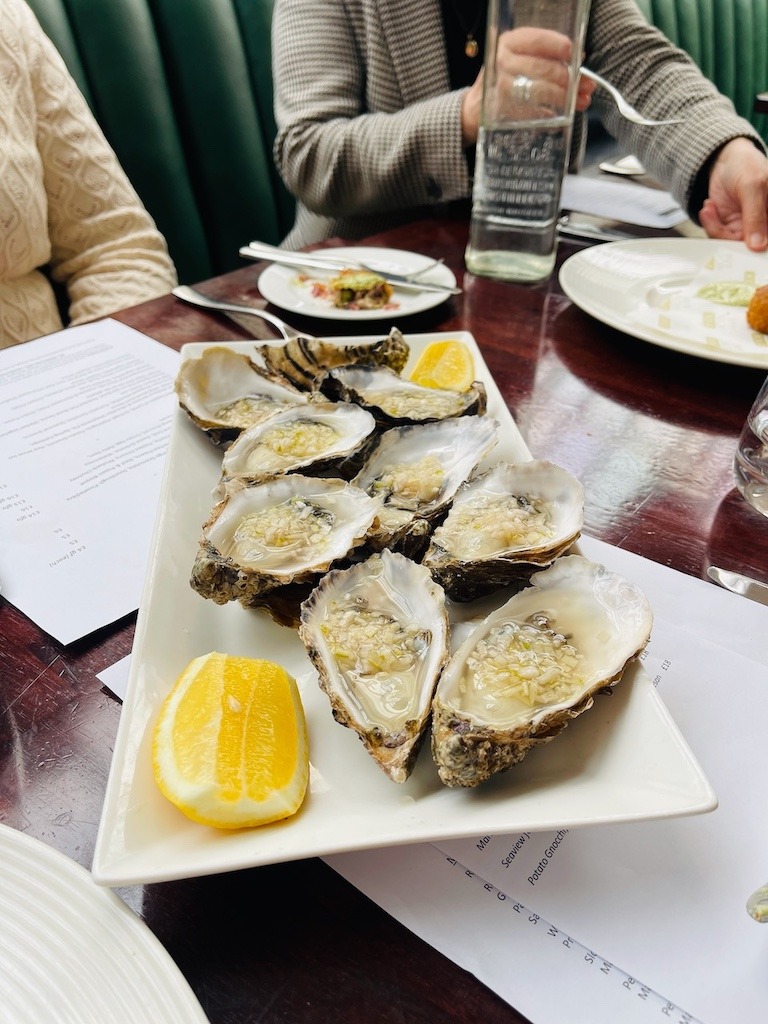
Pacific oysters (also called rock oysters or gigas) are the more widely farmed variety. They’re available year-round, have a higher meat-to-shell ratio, and tend to be milder and slightly sweet. At Croagh Patrick Seafoods, their Pacific oysters are award-winning for a reason — the cold, plankton-rich Atlantic water does something to them that’s hard to replicate anywhere else.
Many serious oyster people will tell you that the west coast of Ireland produces the best oysters in the world. The combination of Atlantic exposure, cold water, and exceptionally clean growing conditions creates flavour profiles that French producers have long tried to approximate. (Some of France’s most celebrated oysters are actually grown in Ireland and only finished in French waters.) At Croagh Patrick Seafoods, you can taste both types side by side and decide for yourself. It’s not a difficult afternoon.
Taste the Ocean
Whether you’re an oyster rookie or a seafood savant, a visit to Croagh Patrick Seafoods along the Wild Atlantic Way is an experience you won’t want to miss when in Ireland. There’s nothing quite like savouring Irish oysters this fresh—unless, of course, you wade out to the trestles and harvest them yourself, which, by the way, you can actually do!
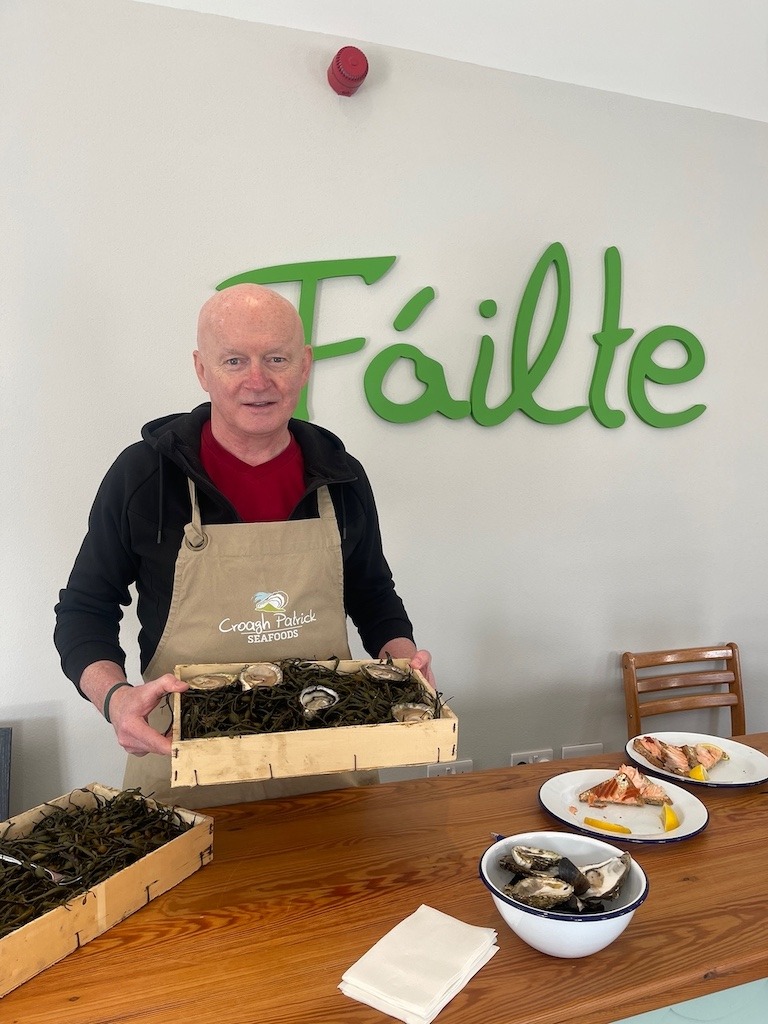
From the moment you arrive, Padraic and his team welcome you with the kind of legendary Irish hospitality that makes you feel like family. The farm offers an authentic taste of Ireland’s maritime heritage while offering a different perspective on why Ireland is such a special place. Only a five-minute cycle from the Greenway, or a short drive from Westport or Newport, Croagh Patrick Seafoods is a must-visit destination.
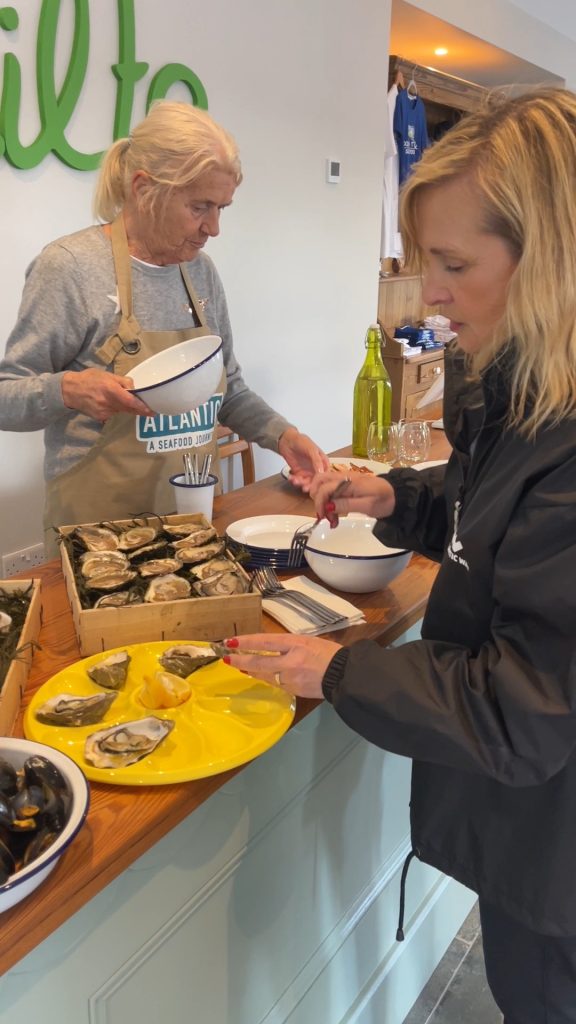
Their offerings include Clew Bay native oysters, award-winning Pacific oysters, mussels, and clams, all cultivated in pristine Atlantic waters at their mariculture sites. During a tour, you’ll forage along the idyllic foreshore, where Grade A Irish oysters are carefully nurtured. Learn how they grow from seed to table—or as Padraic says, “from our shore to your door.”
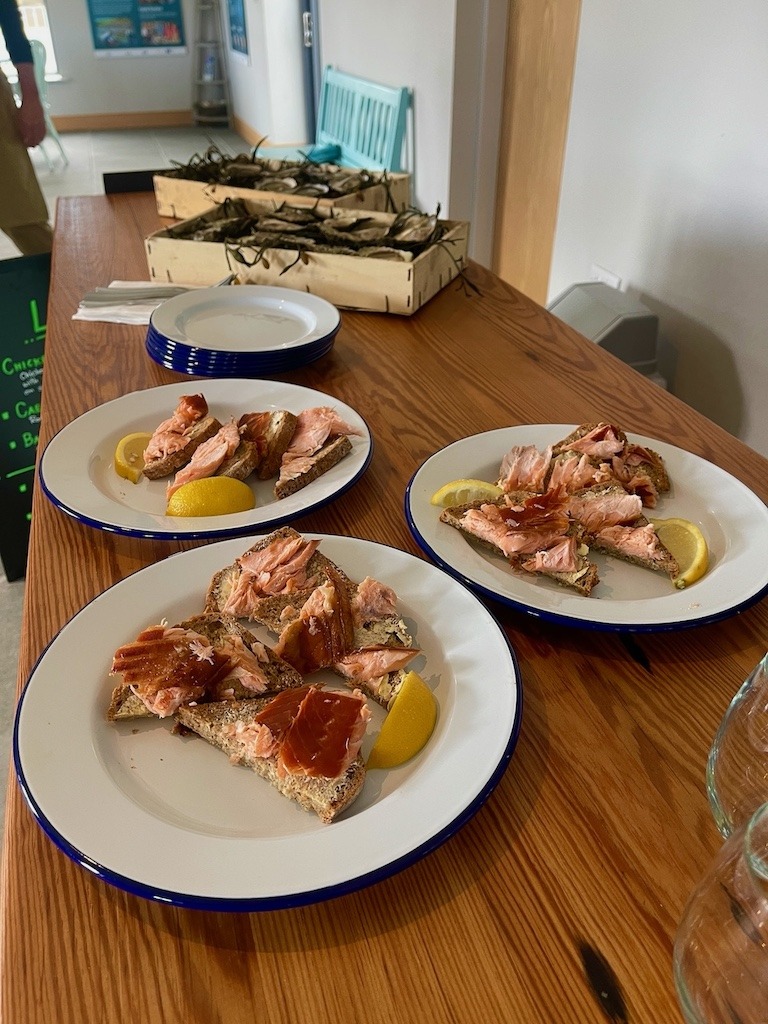
You can pick your own oysters directly from the trestles before mastering the art of shucking and cooking. The tour ends with a tasting that’s nothing short of unforgettable. And if you’re just in the mood for a meal, you’ll find an incredible menu featuring fresh or grilled Irish oysters, steamed mussels, and Achill smoked salmon. Pair your feast with a glass of chilled wine or locally brewed Mescan beer, all while taking in one of the most spectacular views you’ll find anywhere.
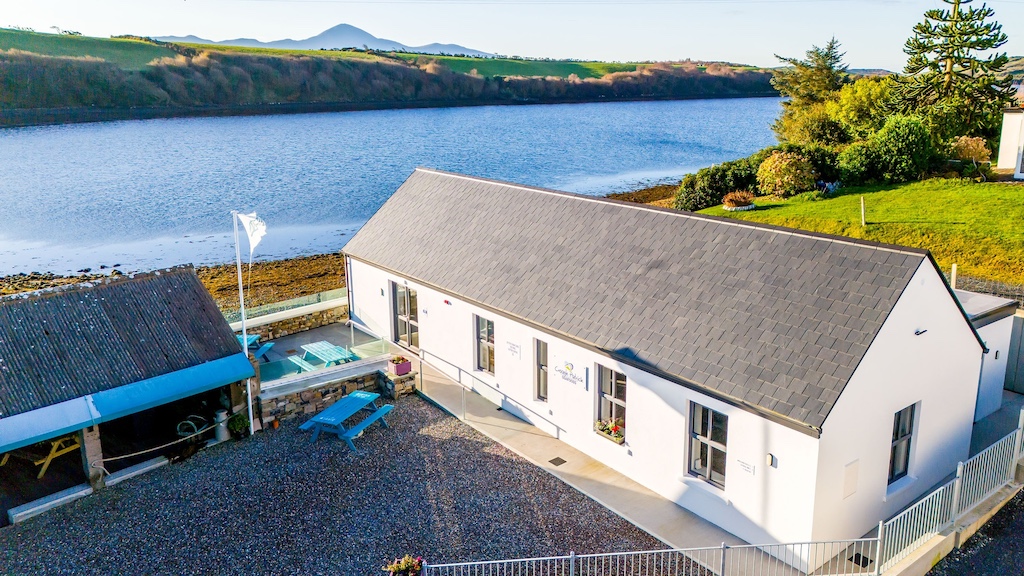
More than a culinary adventure, a visit to Croagh Patrick Seafoods is about connecting to the ocean, embracing sustainability, and experiencing the heart of Ireland’s coastal culture. It’s a place where the sea and the land come together in perfect harmony—and one that will leave you with a newfound appreciation for Irish oysters and the magic of the Wild Atlantic Way.
 Planning a Trip to Ireland?
Croagh Patrick Seafoods is just one stop on one of the most spectacular road trips you can take. My full Ireland road trip itinerary covers the Wild Atlantic Way from Westport through Donegal to the Causeway Coast — with everything you need to know before you go.
Read the Full Ireland Road Trip Itinerary
FAQ: Irish Oysters
They are widely considered among the best in the world. The cold, clean Atlantic waters surrounding Ireland, particularly along the west coast, produce oysters with exceptional meat content and a distinctly briny, complex flavour. Many of France’s most celebrated oysters are actually grown in Ireland and only finished in French waters, which tells you everything you need to know.
There are two main types. Native flat oysters (Ostrea edulis) are the original Irish oyster, round, intensely flavoured, and considered a delicacy with a longer growing season. Pacific oysters (also called rock oysters) are more widely farmed, available year-round, and tend to be milder and slightly sweet. At Croagh Patrick Seafoods on Clew Bay, you can taste both.
Ireland’s native oysters follow the traditional “R month” rule, meaning they are at their best from September through April when the water is cold and the oysters aren’t spawning. Pacific oysters are farmed year-round, so there is never truly a bad time to eat Irish oysters. If you are planning a trip specifically around native flat oysters, aim for autumn or winter.
Briny and clean with a distinct mineral quality that comes directly from the Atlantic. Native flat oysters have a more complex, almost metallic finish that lingers. Pacific oysters are milder, with a slightly sweet, creamy quality and higher meat content. Both taste like the ocean in the best possible way, and both are a world away from anything you have likely eaten at home
Updated May 8, 2026
 Now is Not the Time for Retreat: Embracing the Importance of Human Connection
